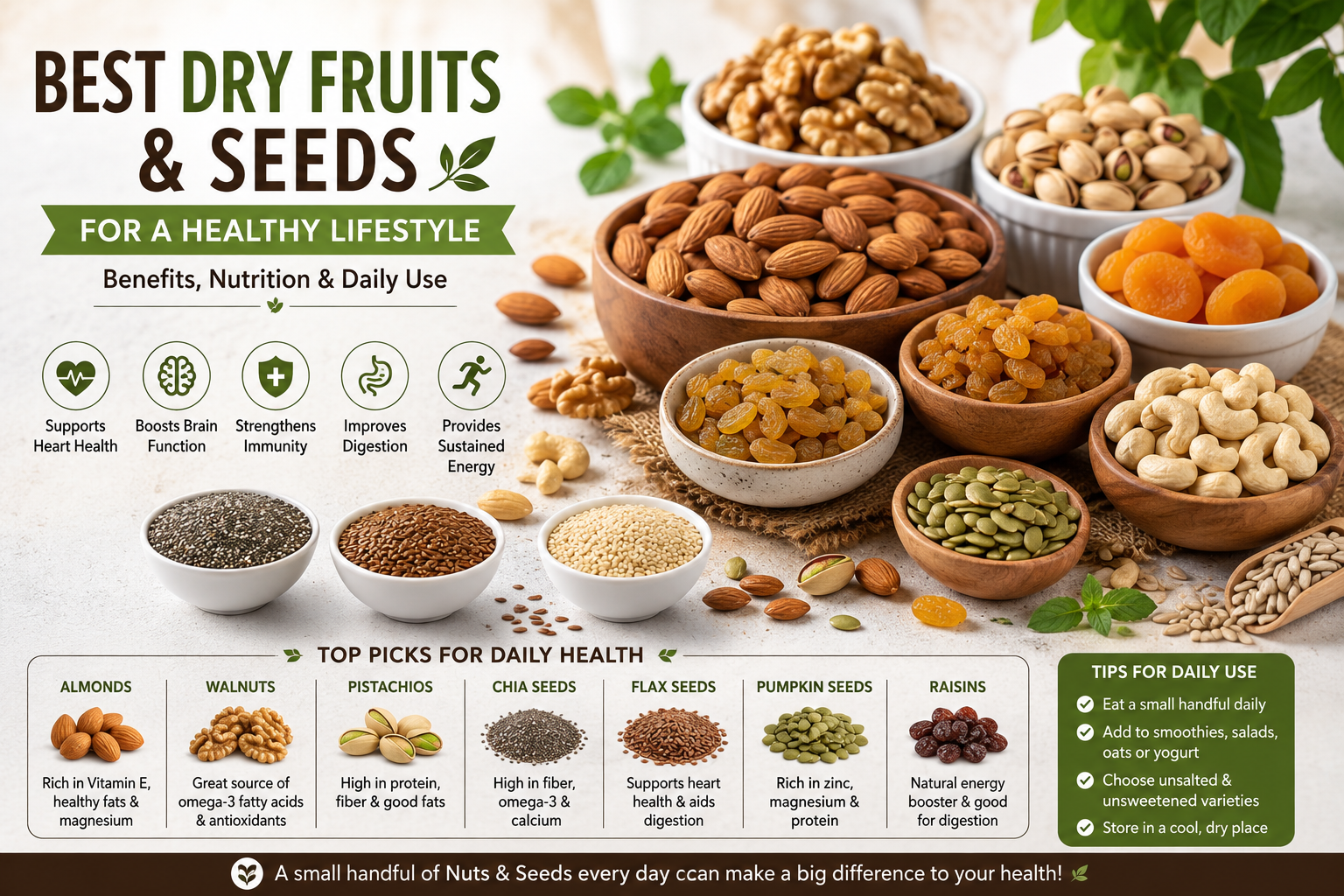
A healthy lifestyle is not only about exercising regularly or following a strict diet. What you eat every day also plays an important role in supporting energy, nutrition, and overall well-being. Among the easiest foods to include in a balanced diet are dry fruits and seeds. They are convenient, versatile, and packed with nutrients such as healthy fats, protein, fiber, vitamins, minerals, and antioxidants.
From almonds and walnuts to pumpkin seeds, chia seeds, and raisins, different varieties offer different nutritional benefits. Adding a small serving of Healthy Seeds, Nuts & Seeds, and Healthy Dry Fruits to your daily meals can be a simple way to make your diet more nutritious.
Dry fruits and seeds are nutrient-dense foods, meaning they provide a good amount of nutrients in relatively small portions. They can be especially useful when you want a convenient snack between meals or an easy addition to breakfast.
Nuts such as almonds, walnuts, cashews, and pistachios provide healthy fats, protein, fiber, and minerals. Seeds such as chia, flax, sunflower, and pumpkin seeds can contribute protein, healthy fats, fiber, and important micronutrients.
When eaten in appropriate portions as part of a balanced diet, these foods can support several aspects of a healthy lifestyle.
Almonds are one of the most popular dry fruits and are an excellent source of vitamin E, magnesium, fiber, and healthy fats. Their combination of nutrients makes them a convenient everyday snack.
You can eat a small handful of almonds on their own or add them to oatmeal, smoothies, yogurt, or homemade energy bites. Soaked almonds are also traditionally consumed in many Indian households.
Walnuts are well known for their healthy fat content, including plant-based omega-3 fatty acid ALA. They also provide protein, fiber, copper, and manganese.
Their slightly crunchy texture makes them ideal for breakfast bowls, salads, desserts, or simply as a snack. Including walnuts in a varied diet can be a practical way to increase your intake of nutrient-rich plant foods.
Pistachios offer protein, fiber, healthy fats, and several vitamins and minerals. They can make a satisfying snack because their combination of protein and fiber may help you feel full.
Choose plain or lightly roasted pistachios when possible, especially if you are trying to limit excess salt or added ingredients.
Cashews have a creamy texture and are rich in copper, magnesium, healthy fats, and plant-based protein. They work well in both sweet and savory recipes.
You can add cashews to vegetable dishes, rice, homemade trail mixes, smoothies, or desserts. Because they are calorie-dense, a moderate serving is usually enough.
Raisins are dried grapes and provide naturally occurring sugars, carbohydrates, fiber, and minerals such as potassium and iron. Their natural sweetness makes them a useful alternative to highly processed sweet snacks.
Add raisins to oatmeal, cereals, yogurt, salads, or traditional Indian dishes. Since dried fruits are concentrated in natural sugars and calories compared with fresh fruit, portion size is important.
Chia seeds are small but nutrient-rich. They provide fiber, plant-based omega-3 fatty acids, protein, and minerals such as calcium and magnesium.
They can absorb liquid and develop a gel-like texture, making them useful for overnight oats, smoothies, puddings, and yogurt bowls.
Flax seeds are another good source of plant-based omega-3 ALA and dietary fiber.
They also contain lignans, naturally occurring plant compounds with antioxidant properties.
Ground flax seeds are often easier to incorporate into meals. Sprinkle them over oatmeal, smoothies, yogurt, or salads for a simple nutritional boost.
Pumpkin seeds are a good source of protein, healthy fats, magnesium, zinc, and other nutrients. Their crunchy texture makes them a great topping for salads, soups, breakfast bowls, and homemade snacks.
They can also be included in a homemade Nuts & Seeds mix for a nutritious snack option.
Sunflower seeds provide healthy fats, protein, vitamin E, and minerals. They can be eaten roasted or added to salads, cereals, breads, and trail mixes.
For everyday use, unsalted or lightly salted varieties can be a better choice than heavily seasoned versions.
Sesame seeds are commonly used in Indian cooking and provide healthy fats, protein, fiber, calcium, and other minerals. They can be used in chutneys, ladoos, vegetable dishes, breads, and homemade snack recipes.
Their versatility makes them an easy ingredient for adding more nutrient-dense foods to everyday meals.
Including a variety of nuts and seeds in your diet can offer several nutritional benefits.
Supports heart-friendly eating: Many nuts and seeds contain unsaturated fats, which can be part of a heart-conscious eating pattern when they replace foods higher in saturated fats.
Provides dietary fiber: Seeds, nuts, and some dried fruits provide fiber that supports normal digestive function and contributes to feelings of fullness.
Adds plant-based protein: Nuts and seeds can contribute protein to meals and snacks, making them particularly useful for people looking to include more plant-based foods.
Provides important minerals: Magnesium, zinc, copper, manganese, calcium, and other minerals are found in different varieties of nuts and seeds.
Convenient source of energy: Their combination of fats, carbohydrates, and protein makes them practical snacks for busy days.
Rich in antioxidants: Several nuts and seeds contain vitamin E and other antioxidant compounds that help protect cells from oxidative stress.
One of the best things about dry fruits and seeds is that they require very little preparation. Try adding a small portion to your breakfast, snack, or main meal.
For breakfast, add almonds, walnuts, chia seeds, or flax seeds to oatmeal, yogurt, smoothies, or cereal. During the day, create a homemade trail mix using almonds, pumpkin seeds, sunflower seeds, pistachios, and a small amount of raisins.
You can also sprinkle seeds over salads or soups, use sesame seeds in Indian recipes, or add chopped nuts to homemade snacks and desserts.
For many people, a small handful of nuts or a spoonful of seeds can be enough to complement a balanced meal. However, serving sizes should be adjusted according to individual nutritional needs.
When buying dry fruits and seeds, check the ingredient and nutrition labels. Prefer products with minimal added sugar, excessive salt, or unnecessary additives.
Choose fresh products stored in sealed packaging and keep them in a cool, dry place. Nuts and seeds contain natural oils, so proper storage helps maintain their quality and freshness.
It is also useful to choose variety rather than relying on just one type. Different foods provide different nutrients, so combining several options can make your overall diet more diverse.
Dry fruits and seeds can be a simple and delicious addition to a balanced lifestyle. Almonds, walnuts, pistachios, raisins, chia seeds, flax seeds, pumpkin seeds, sunflower seeds, and sesame seeds each offer a unique nutritional profile.
Whether you enjoy them as a quick snack, add them to breakfast, or use them in everyday recipes, Healthy Dry Fruits and Healthy Seeds can help make nutritious eating more convenient. The key is to focus on variety, reasonable portions, and minimally processed options.
A balanced diet does not need to be complicated. Sometimes, small daily choices—such as replacing highly processed snacks with a serving of Nuts & Seeds or adding seeds to breakfast—can make healthy eating easier and more enjoyable.

Discover how **Room Sprays** can refresh your home with pleasant and inviting fragrances. Learn about the benefits, popular scents, everyday uses, and tips for choosing the **Best Room Sprays** for different spaces. From floral and citrus to woody and herbal fragrances, find out how a **Room Freshener Spray** can enhance your indoor atmosphere. Explore simple ways to choose and use room sprays for a fresher, more comfortable home.

Reed diffusers are a simple and stylish way to keep your home smelling fresh without flames or electricity. This guide explains how reed diffusers work, their benefits, popular fragrance options, and how to choose the right one for different rooms. Learn about fragrance strength, reed types, placement, and maintenance to get longer-lasting results. Whether you want a relaxing bedroom scent or a refreshing fragrance for your living room, discover how to choose the best reed diffusers for home.

Discover the world of **Scented Candles** and learn about their different types, benefits, popular fragrances, and how to choose the right one for your space. From floral, fruity, vanilla, and woody scents to soy wax and decorative options, this guide explores the choices available for every mood and occasion. Learn how **Scented Candles for Home** can enhance décor, create a relaxing atmosphere, and add warmth to everyday moments. Find helpful tips for choosing the **Best Scented Candles** based on fragrance, wax type, size, room, and personal preference, along with essential candle safety tips for a better experience.


