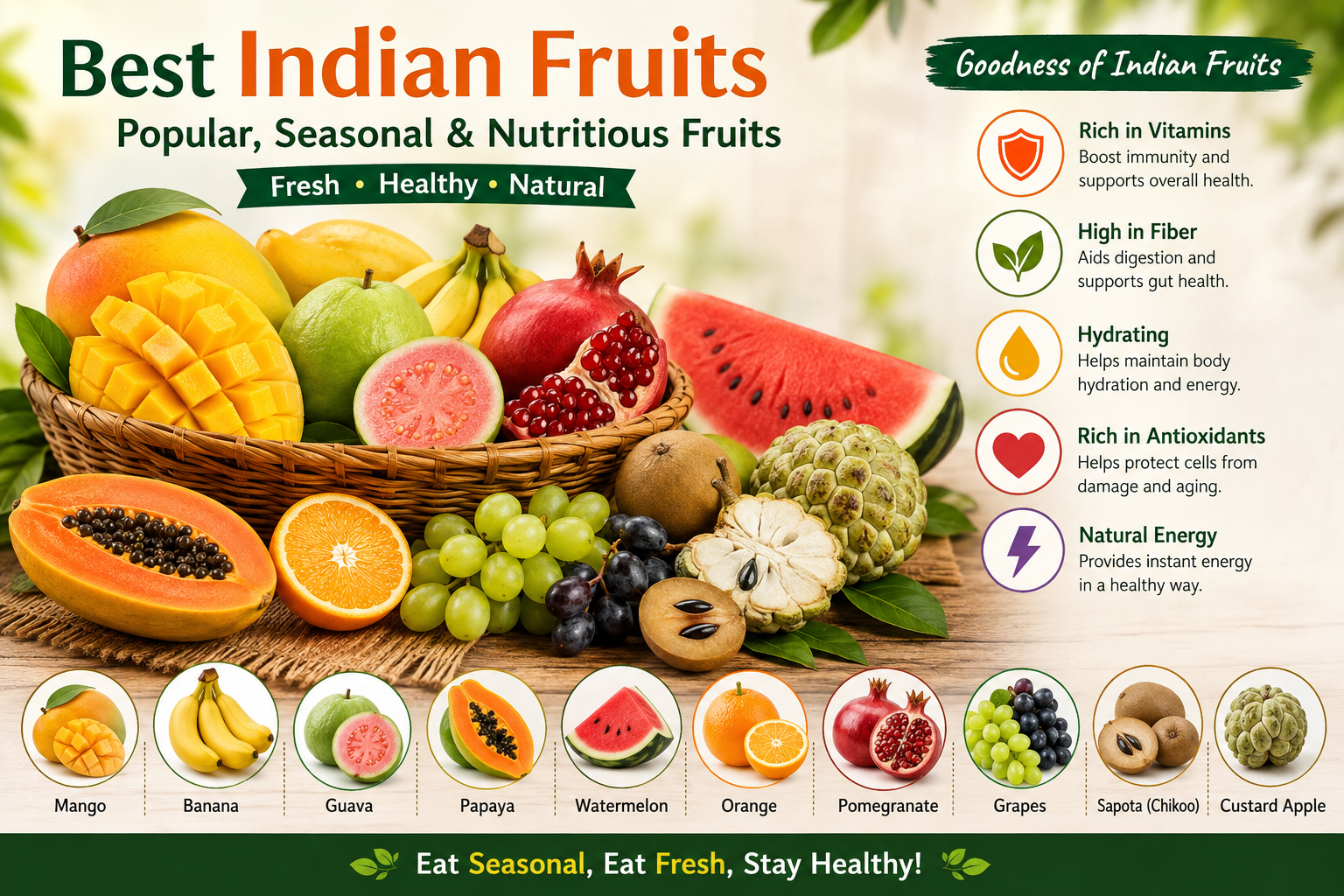
India is known for its incredible variety of fruits, with different regions and seasons bringing something delicious to the table. From the sweet and juicy mango to the refreshing watermelon and nutrient-rich guava, Indian fruits are an important part of everyday diets across the country. They are naturally flavorful, versatile, and packed with essential nutrients.
Adding fresh fruits to your daily meals is an easy way to enjoy vitamins, minerals, fiber, antioxidants, and natural hydration. Since many fruits are available according to the season, choosing seasonal fruits can also help you enjoy better freshness, flavor, and variety throughout the year.
Whether you are looking for healthy breakfast options, refreshing summer fruits, or nutritious snacks, here are some of the best Indian fruits worth trying.
No list of Indian fruits is complete without mango. Popular varieties such as Alphonso, Kesar, Dasheri, Langra, and Banganapalli are enjoyed across India during the summer season.
Mangoes are naturally sweet and contain vitamins such as vitamin C and vitamin A, along with antioxidants. They can be eaten fresh, added to smoothies, or used in traditional Indian preparations.
Mango is one of the most loved seasonal fruits, and its limited availability makes the summer season especially exciting for fruit lovers.
Bananas are among the easiest fruits to include in an everyday diet. They are available throughout much of the year and are convenient to carry, making them a popular choice for breakfast or a quick snack.
Bananas provide carbohydrates for energy and contain potassium and dietary fiber. They can be eaten on their own or added to smoothies, oatmeal, cereal, and desserts.
For people looking for convenient fresh fruits that require little preparation, bananas are an excellent option.
Guava is another nutritious fruit commonly enjoyed in India. It has a distinctive fragrance, slightly crunchy texture, and sweet-tangy flavor.
Guavas are well known for their vitamin C content and also provide dietary fiber. The fruit can be eaten whole after washing and cutting, making it a simple addition to your daily fruit intake.
Because of its nutritional value and availability, guava deserves a place among the best Indian fruits to try.
Papaya is a soft, naturally sweet tropical fruit enjoyed in many parts of India. Its orange-colored flesh contains nutrients such as vitamin C, vitamin A, and antioxidants.
Papaya is also a source of dietary fiber and can be a refreshing addition to breakfast or an afternoon snack. It is often eaten fresh after removing the seeds and skin.
If you prefer soft and naturally sweet fresh fruits, papaya is worth adding to your fruit bowl.
When temperatures rise, watermelon becomes one of the most refreshing fruits available. It contains a high percentage of water, making it particularly enjoyable during India's hot summer months.
Watermelon also provides vitamins, minerals, and antioxidants. Its naturally sweet flavor makes it a popular choice for family gatherings, picnics, and summer snacks.
Enjoying watermelon chilled and freshly cut is one of the simplest ways to add more fruit to your diet.
Oranges are loved for their refreshing taste and juicy texture. They are a good source of vitamin C and can be enjoyed as a convenient snack.
India produces different varieties of citrus fruits, and oranges are particularly popular during their peak growing seasons. Eating the whole fruit also provides dietary fiber.
Instead of relying only on packaged juices, enjoying whole fresh fruits such as oranges can be a simple way to increase your daily fruit intake.
Pomegranate is easily recognized by its bright red edible seeds and sweet-tart flavor. It can be enjoyed on its own or sprinkled over salads, yogurt, and other dishes.
Pomegranates contain antioxidants and provide vitamin C, vitamin K, and dietary fiber. Their vibrant appearance also makes them a popular addition to festive meals and healthy recipes.
Although removing the seeds takes a little extra effort, the flavor and nutritional value make pomegranate a favorite among many fruit lovers.
Green, black, and red grapes are popular in India and can be eaten straight from the bunch after washing. They are naturally sweet and contain water, carbohydrates, and antioxidants.
Grapes are particularly convenient when you want a quick snack without cutting or peeling a fruit. They can also be added to fruit salads or chilled for a refreshing treat.
Choosing grapes when they are naturally in season is a great way to enjoy flavorful seasonal fruits.
Sapota, commonly called chikoo, is a popular Indian tropical fruit with soft, grainy flesh and a naturally sweet taste. It is especially enjoyable when fully ripe.
Chikoo provides dietary fiber and several micronutrients. Its creamy texture makes it suitable for smoothies and milkshakes as well as eating fresh.
For anyone exploring traditional Indian fruits, chikoo is a delicious fruit that should not be overlooked.
Custard apple, or sitaphal, is a unique seasonal fruit with creamy flesh and a naturally sweet flavor. It is usually available for a limited period, making it a special treat when it appears in local markets.
The fruit contains fiber and several vitamins and minerals. Its soft texture makes it particularly appealing to people who enjoy creamy fruits.
Like many seasonal fruits, custard apple is best enjoyed when naturally ripe and in season.
Adding a variety of fruits to your diet can offer several nutritional benefits. Different fruits provide different combinations of nutrients, so eating a colorful selection is a practical approach to variety.
Fruits can provide important vitamins and minerals, including vitamin C, vitamin A, potassium, and folate. Including different fruits throughout the week helps diversify your nutrient intake.
Many fruits contain dietary fiber, which is important for normal digestive function. Guava, papaya, apples, pears, and several other fruits can contribute fiber to your daily diet.
Fruits such as watermelon, oranges, muskmelon, and grapes contain substantial amounts of water. They can complement your regular fluid intake, especially during hot weather.
Many colorful fruits contain naturally occurring antioxidant compounds. Including a range of fruits in your diet is one way to benefit from the different plant compounds they contain.
Fresh fruit is naturally convenient and can be a better everyday snack choice than many highly processed foods. Keeping washed and ready-to-eat fruits available can make healthy snacking simpler.
When buying fruits, look for produce that is fresh, clean, and appropriate for its natural season. Depending on the fruit, signs of good quality can include a pleasant aroma, appropriate firmness, vibrant appearance, and absence of significant bruising or spoilage.
Buying seasonal fruits from local markets can also give you the opportunity to enjoy different varieties throughout the year. Rather than eating the same fruit every day, try rotating fruits based on availability.
Remember to wash fruits properly before eating them, particularly when consuming them raw.
One of the best things about Indian fruits is the incredible variety available across different seasons. Summer brings mangoes, watermelon, and several other refreshing choices, while other months offer fruits such as guava, oranges, pomegranate, grapes, and custard apple.
Instead of focusing on just one "superfruit," try including different fresh fruits in your regular diet. A colorful fruit bowl can provide variety in taste, texture, and nutrients while making everyday meals more enjoyable.
From the famous Indian mango to the humble banana and the seasonal custard apple, there is always something new to discover. Explore local and seasonal produce, choose fruits that you enjoy, and make them a regular part of a balanced eating pattern.

Discover the benefits of Alcohol-Free Attar and explore a variety of fragrances to suit your personal style. Learn about popular attar types, including floral, woody, musk, aquatic, gourmand, and herbal scents. Find helpful tips for choosing the Best Alcohol-Free Attar for everyday wear and special occasions. Understand what affects fragrance longevity and how to make your attar last longer. Explore the world of traditional fragrance oils with Totally Indian and find a scent that matches your preferences.

Discover how to choose the best fragrance with this complete guide to perfumes, attars and fragrance notes. Learn about popular scent families, fragrance longevity, everyday fragrance choices and practical tips to find a scent that suits your personality and lifestyle. Explore fragrance options with Totally Indian and make your next fragrance purchase with confidence.

Discover how to choose the best baby care products for newborns, from gentle baby lotion and mild cleansers to massage oils and diaper care essentials. Explore practical skincare tips, ingredient advice, and a simple newborn care checklist to help new parents make informed choices.


