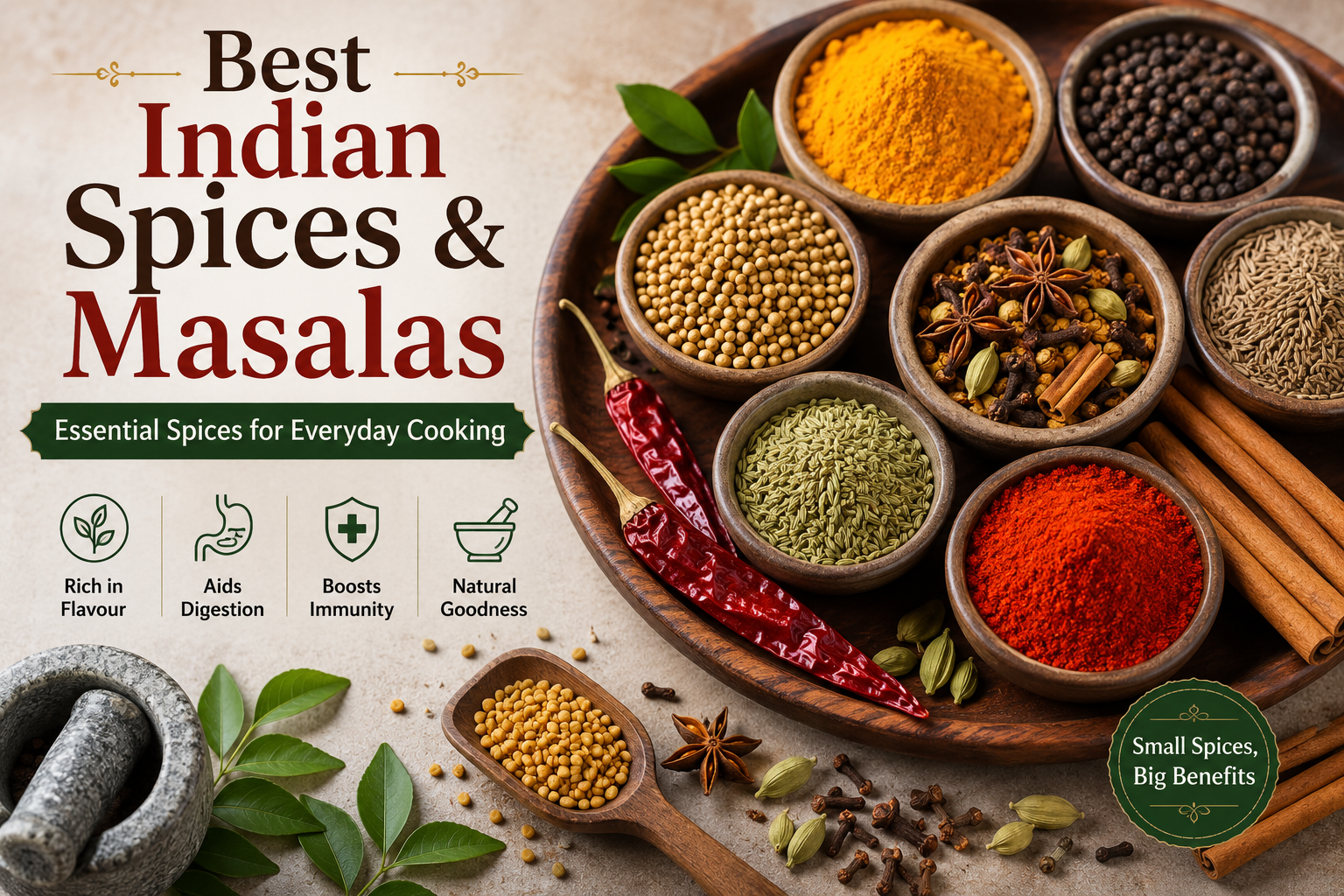
Indian cooking is loved around the world for its rich aroma, vibrant colours, and layers of flavour. At the heart of almost every Indian recipe are Indian spices and masalas. From a simple dal to a festive biryani, the right combination of spices can completely transform an ordinary dish into something delicious and comforting.
Whether you are setting up your kitchen for the first time or simply want to upgrade your spice collection, knowing which best spices to keep at home can make everyday cooking easier. Indian cuisine uses a wide variety of whole and ground spices, each offering a distinctive flavour, aroma, and character.
In this guide, let’s explore the most essential Indian spices, popular masalas, their uses, and why they deserve a place in your everyday kitchen.
Spices are much more than flavouring ingredients. They form the foundation of Indian cuisine and are used to create different tastes in regional dishes.
For example, cumin adds an earthy aroma, turmeric gives food its familiar golden colour, while cardamom brings a naturally sweet fragrance. When spices are combined in the right proportions, they create a balanced Indian Masala that enhances the overall taste of a dish.
Many traditional Indian spices are also valued for their nutritional properties. Spices such as turmeric, ginger, garlic, cumin, and black pepper contain naturally occurring compounds and antioxidants, making them a useful part of a varied and balanced diet.
You don't need dozens of spices to prepare delicious Indian meals. A few versatile ingredients can be used across curries, vegetables, dals, rice dishes, snacks, and more.
Turmeric is one of the most commonly used Indian spices. Known for its bright yellow colour, it is used in dals, curries, vegetables, rice dishes, and marinades.
Turmeric has a warm, slightly bitter flavour and is traditionally valued for its antioxidant properties. A small amount is usually enough to add colour and depth to everyday dishes.
Cumin, or jeera, is another kitchen essential. Its warm, earthy and slightly nutty flavour makes it suitable for a wide range of Indian recipes.
Cumin seeds are often tempered in hot oil or ghee before other ingredients are added. Ground cumin is also commonly used in spice blends, raita, chaats, and vegetable dishes.
Coriander seeds and coriander powder are widely used in Indian cooking. Ground coriander has a mild, earthy and slightly citrusy flavour.
It is commonly added to curries, gravies, dals, marinades and vegetable preparations. Coriander powder is also an important ingredient in many homemade masala blends.
Red chilli adds heat and colour to Indian dishes. Depending on the variety, chilli powder can range from mildly spicy to very hot.
For everyday cooking, you can choose a variety based on your preferred spice level. Kashmiri chilli powder is particularly popular when you want vibrant colour with comparatively less heat.
Black pepper has a sharp, warm and slightly pungent flavour. It works well in soups, curries, marinades, rice dishes and beverages such as masala chai.
Freshly ground black pepper can also provide a stronger aroma than pre-ground varieties, making it a useful addition to your collection of best spices.
Mustard seeds are particularly popular in South and West Indian cooking. They are commonly used for tempering vegetables, dals, chutneys, pickles and curries.
When added to hot oil, mustard seeds crackle and release their distinctive aroma, giving dishes an extra layer of flavour.
Cardamom is prized for its sweet, fragrant aroma. Green cardamom is commonly used in chai, desserts, pulao, biryani and some rich gravies.
Because of its intense fragrance, only a small quantity is generally needed. It is also an important ingredient in several aromatic spice blends.
Cinnamon adds a warm, mildly sweet flavour to both savoury and sweet recipes. It is frequently used in biryani, pulao, curries, desserts and beverages.
A small piece of cinnamon can make a noticeable difference to the aroma of a dish.
Cloves have a strong, warm and slightly sweet flavour. They are often combined with cinnamon, cardamom and other spices in rice dishes and Indian Masala blends.
Cloves are especially popular in biryani, pulao, garam masala and festive recipes.
Fenugreek seeds, or methi seeds, have a distinctive slightly bitter flavour and are used in pickles, curries and spice preparations.
Dried fenugreek leaves, commonly called kasuri methi, are also widely used to finish creamy gravies, paneer dishes and Indian curries.
While individual spices are essential, ready-made or homemade masala blends make cooking even more convenient. They combine multiple spices to create a balanced flavour profile.
Garam masala is one of the most popular Indian spice blends. It commonly contains spices such as cumin, coriander, cinnamon, cardamom, cloves and black pepper, although the exact ingredients vary.
It is often added towards the end of cooking to enhance aroma and flavour.
Chaat masala is known for its tangy, salty and slightly spicy taste. It is commonly sprinkled over fruit, salads, chaats, snacks, raita and street-food-inspired dishes.
Chole masala is specifically designed for chickpea-based dishes. It typically combines aromatic spices with ingredients that give chole its distinctive bold flavour.
Kitchen King masala is a versatile spice blend used in many North Indian vegetable and curry preparations. It can be particularly useful when you want to add depth to everyday vegetarian dishes.
One of the biggest advantages of using spices is that they can make food more flavourful without relying heavily on rich sauces or excessive amounts of salt.
Here are some potential benefits associated with commonly used spices:
However, spices should be viewed as part of an overall balanced diet rather than as replacements for medical treatment or a healthy lifestyle.
Both whole and ground spices have their own advantages.
Whole spices generally retain their aroma well when stored correctly and can be freshly ground whenever required. They are particularly useful for tempering, biryani, pulao and slow-cooked dishes.
Ground spices are convenient and save preparation time. They are ideal for everyday curries, dals, marinades and quick meals.
If possible, keeping a combination of whole and powdered spices gives you greater flexibility in the kitchen.
Proper storage is important because heat, moisture, light and air can gradually reduce the aroma and quality of spices.
Keep your Indian spices in airtight containers and store them in a cool, dry place away from direct sunlight. Avoid using wet spoons inside spice containers, as moisture can affect their freshness.
It is also better to buy spices in quantities that you can reasonably use within their recommended storage period rather than keeping large amounts for years.
When shopping for the best spices, focus on freshness, aroma, ingredient quality and packaging. Choose spices from reliable sources and check the packaging and best-before information.
For a basic Indian kitchen, start with turmeric, cumin, coriander, red chilli, black pepper, mustard seeds, garam masala, cinnamon, cardamom and cloves. You can gradually add regional spices and specialty masalas depending on the recipes you enjoy.
A well-stocked spice collection can make everyday cooking more exciting and versatile. From the earthy flavour of cumin to the warmth of cinnamon and the vibrant colour of turmeric, Indian spices bring character to countless dishes.
Whether you prefer cooking traditional family recipes or experimenting with new flavours, having essential best spices and versatile Indian Masala blends in your kitchen can help you create delicious meals with ease. Start with a few everyday favourites, store them properly, and explore different combinations as your cooking journey grows.

Discover the world of Essential Oils and explore their different types, benefits, and everyday uses. From refreshing lemon and peppermint to calming lavender and warm sandalwood, learn how different fragrances can enhance your home and personal care routines. This guide explains the benefits of essential oils, their common applications, and important safety precautions. Find out how to identify Pure Essential Oils by checking ingredients, quality, and product information. Learn how to choose the Best Essential Oils to suit your fragrance preferences, lifestyle, and needs.

Discover the world of **diffuser oils** and learn about their types, benefits, uses, and fragrance options. From floral and citrus to woody and herbal scents, explore how **aromatherapy diffuser oils** can create a pleasant and relaxing atmosphere at home. Learn how to choose the **best diffuser oils** based on fragrance, room, ingredients, and personal preferences.

Discover how **Home Fragrance Diffusers** can transform your living space with long-lasting and inviting aromas. Learn about different types of **Fragrance Diffusers**, popular fragrance options, their benefits, and how they can enhance your home’s ambience. From reed and ultrasonic diffusers to floral, woody, citrus, and fresh fragrances, explore the options available for every room. Find simple tips to choose the **Best Diffuser for Home** based on your space, fragrance preference, and lifestyle.


