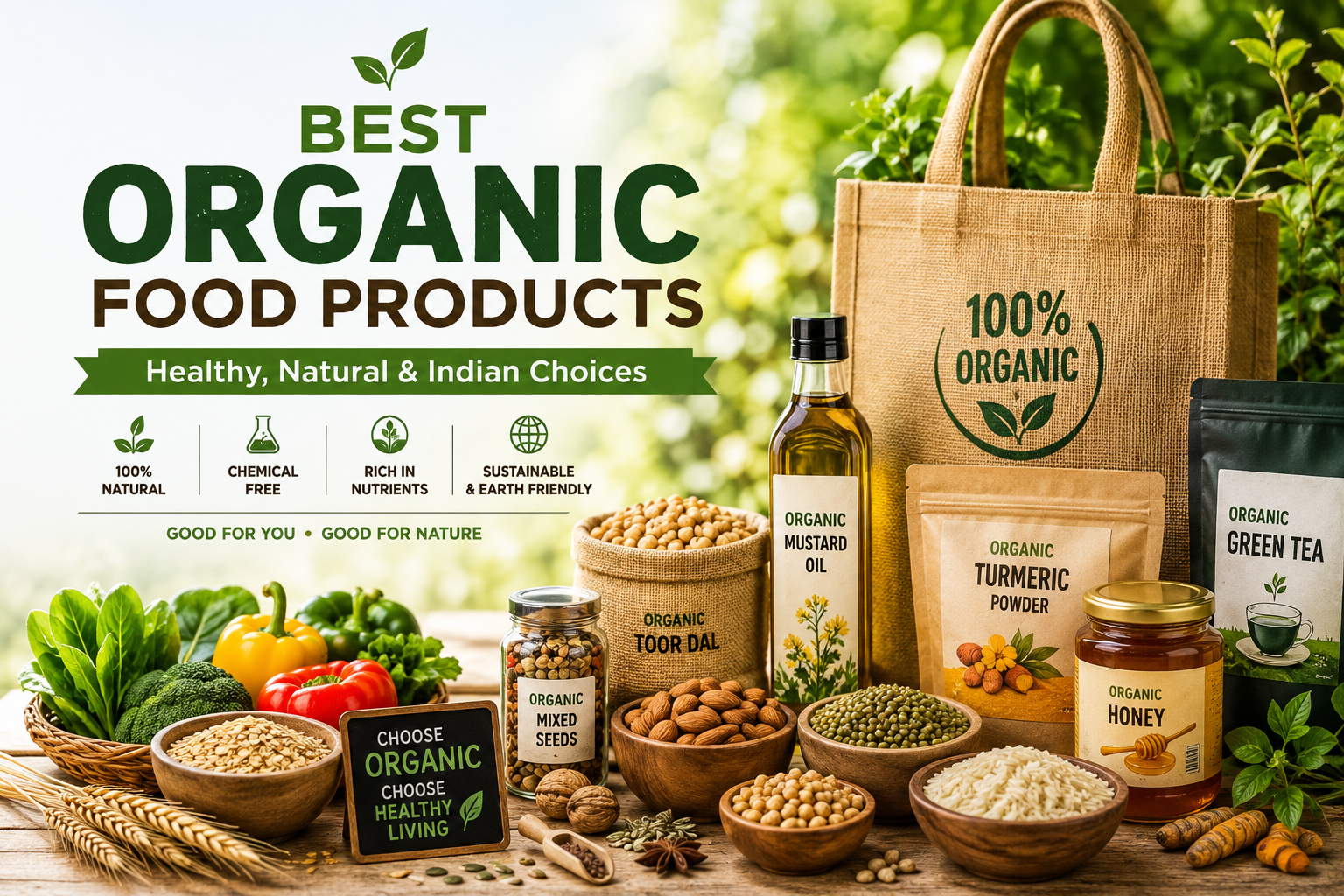
In today’s busy lifestyle, people are becoming more conscious about what they eat and where their food comes from. From choosing fresh vegetables to checking food labels, healthy eating has become an important part of everyday life. This is where Organic Food is gaining popularity. Organic food products are often chosen by people who want natural, wholesome options for their daily meals.
India has a rich variety of traditional foods, grains, pulses, spices, dry fruits, and other natural ingredients. When these familiar foods are available as organic products, they can be a convenient choice for people looking to make more mindful food decisions.
Whether you are starting your organic journey or simply want to add more Healthy Food to your kitchen, understanding different types of organic products can help you make better choices.
Organic Food generally refers to food produced using farming practices that follow organic standards. These practices typically focus on maintaining soil health, encouraging biodiversity, and limiting the use of certain synthetic agricultural inputs.
Organic food can include much more than fruits and vegetables. Today, you can find a wide range of Organic Products, including grains, pulses, spices, flours, oils, tea, coffee, dry fruits, seeds, snacks, and other everyday grocery items.
For Indian households, organic versions of familiar ingredients can make it easier to maintain traditional cooking habits while paying more attention to food quality.
There are several reasons why consumers are increasingly interested in organic groceries. One of the biggest is the desire for simple and naturally sourced food.
Here are some potential benefits and reasons people choose organic products:
Organic farming emphasizes natural farming practices and responsible use of agricultural resources. For consumers, this can be appealing when they want food that fits a more natural lifestyle.
Choosing minimally processed organic ingredients can also encourage healthier eating habits.
A healthy lifestyle is not based on one particular food. Instead, it comes from maintaining a balanced diet containing grains, pulses, vegetables, fruits, nuts, seeds, and other nutritious foods.
Adding suitable Healthy Food options to your everyday meals can make your diet more varied and balanced.
Many people choose organic products because they want to pay greater attention to the quality and source of their food. Checking labels, ingredients, certifications, and processing methods can help consumers make informed decisions.
Organic farming practices can place greater emphasis on soil management, biodiversity, and reducing reliance on certain synthetic agricultural inputs. For environmentally conscious consumers, this is another reason to consider organic choices.
India offers a wide variety of foods that can easily become part of an organic kitchen. Here are some popular categories worth exploring.
Rice, wheat, oats, and millets are everyday staples in many Indian homes. Organic grains can be used to prepare regular meals such as roti, rice dishes, porridge, and other traditional recipes.
Millets such as ragi, bajra, jowar, and foxtail millet are also becoming increasingly popular because of their versatility and nutritional value.
Dal is an essential part of Indian cooking. Organic pulses such as moong dal, masoor dal, chana dal, toor dal, and urad dal can be included in a balanced everyday diet.
Pulses are valued for their protein and fibre content and can be combined with grains and vegetables to create satisfying meals.
Indian cooking is incomplete without spices. Turmeric, cumin, coriander, black pepper, cardamom, cloves, cinnamon, and other spices add flavour and aroma to food.
Choosing Organic Products such as organic spices can be an option for consumers who prefer ingredients produced according to organic farming standards.
Cooking oil is another important kitchen staple. Organic oils may include options such as coconut oil, sesame oil, mustard oil, and other traditionally used oils.
When selecting cooking oil, it is important to consider the type of oil, processing method, quantity used, and how it fits into your overall diet.
Almonds, walnuts, cashews, raisins, dates, chia seeds, flaxseeds, sunflower seeds, and pumpkin seeds are popular additions to a healthy diet.
They can be enjoyed as snacks or added to smoothies, breakfast bowls, salads, and homemade recipes. Since nuts and seeds can be energy-dense, portion size is worth considering.
Tea and coffee are an important part of Indian daily routines. Organic tea and coffee are available for consumers who prefer products made from organically grown ingredients.
From traditional Indian tea to aromatic coffee varieties, these beverages can be enjoyed as part of a balanced lifestyle, especially when excessive sugar is avoided.
For people who enjoy snacking, choosing better-quality options can make a difference. Organic snacks may include roasted nuts, seed mixes, traditional snacks, dried fruits, and other minimally processed products.
However, the word “organic” does not automatically mean a product is low in sugar, salt, fat, or calories. Reading the nutrition label remains important.
One common question is whether organic food is always better than conventional food. The answer depends on several factors.
Organic and conventional foods can both provide important nutrients. The nutritional value of a food depends on the particular ingredient, variety, freshness, storage, preparation, and overall diet.
If you choose organic food, look beyond the word “organic.” Check the ingredient list, nutritional information, packaging, certification or applicable organic standards, and the reputation of the seller.
Most importantly, eating a variety of nutritious foods is more important than focusing on a single food label.
With so many choices available, selecting the right Organic Food products can sometimes feel confusing. Keep these simple tips in mind:
Check certification: Look for appropriate organic certification or recognized standards applicable to the product and market.
Read the ingredients: A product marketed as organic may still contain added sugar, salt, or other ingredients. Always check the label.
Choose minimally processed foods: Whole grains, pulses, nuts, seeds, spices, and other simple ingredients can be useful additions to an everyday kitchen.
Buy according to your needs: You do not have to replace everything in your kitchen at once. Start with products you use regularly.
Compare quality and price: Organic products can sometimes cost more. Compare pack sizes, ingredients, certifications, and overall quality before buying.
The biggest advantage of including organic food in your routine can be the opportunity to become more conscious about your food choices. Instead of relying heavily on highly processed foods, you can focus on whole grains, pulses, vegetables, fruits, nuts, seeds, and traditional Indian ingredients.
Organic food can also encourage people to explore traditional ingredients and cooking methods. From millet-based recipes to homemade dal, spice blends, and nutritious snacks, Indian cuisine already offers many naturally wholesome choices.
The key is balance. Organic food should be part of an overall healthy eating pattern rather than being viewed as a replacement for a balanced diet.
Choosing Organic Food does not have to be complicated. Start with everyday ingredients that are easy to use, such as organic rice, wheat, pulses, spices, oils, dry fruits, seeds, tea, and coffee.
For Indian consumers, the best approach may be to combine traditional foods with mindful purchasing decisions. Select products based on ingredients, quality, certifications, nutritional value, and personal preferences.
From your morning cup of tea to your everyday dal and roti, small changes can help create a more thoughtful kitchen. By choosing suitable Organic Products and including a variety of Healthy Food in your meals, you can enjoy the flavours of
Indian cuisine while supporting a more conscious approach to everyday eating.
Organic food has become an increasingly popular choice for people looking for natural and thoughtfully produced food products. From organic grains and pulses to Indian spices, dry fruits, seeds, tea, coffee, and snacks, there are plenty of options to explore.
However, healthy eating is about more than choosing an organic label. A balanced diet, variety, portion control, food quality, and good eating habits all play an important role.
If you are planning to make your kitchen more natural, start small. Choose the Best Organic Food products that suit your lifestyle, read labels carefully, and gradually build a collection of wholesome ingredients for everyday Indian meals.

Discover how to choose the best fragrance with this complete guide to perfumes, attars and fragrance notes. Learn about popular scent families, fragrance longevity, everyday fragrance choices and practical tips to find a scent that suits your personality and lifestyle. Explore fragrance options with Totally Indian and make your next fragrance purchase with confidence.

Discover how to choose the best baby care products for newborns, from gentle baby lotion and mild cleansers to massage oils and diaper care essentials. Explore practical skincare tips, ingredient advice, and a simple newborn care checklist to help new parents make informed choices.

Discover the best body care products for soft, healthy, and glowing skin. Explore natural body care products, body lotions, herbal soaps, nourishing body oils, and body scrubs for your daily skincare routine. Learn how to choose the right body care essentials according to your skin type and needs. Find quality body care products online to support smooth, hydrated, and nourished skin. Explore the body care collection at Totally Indian and upgrade your everyday skincare routine.


