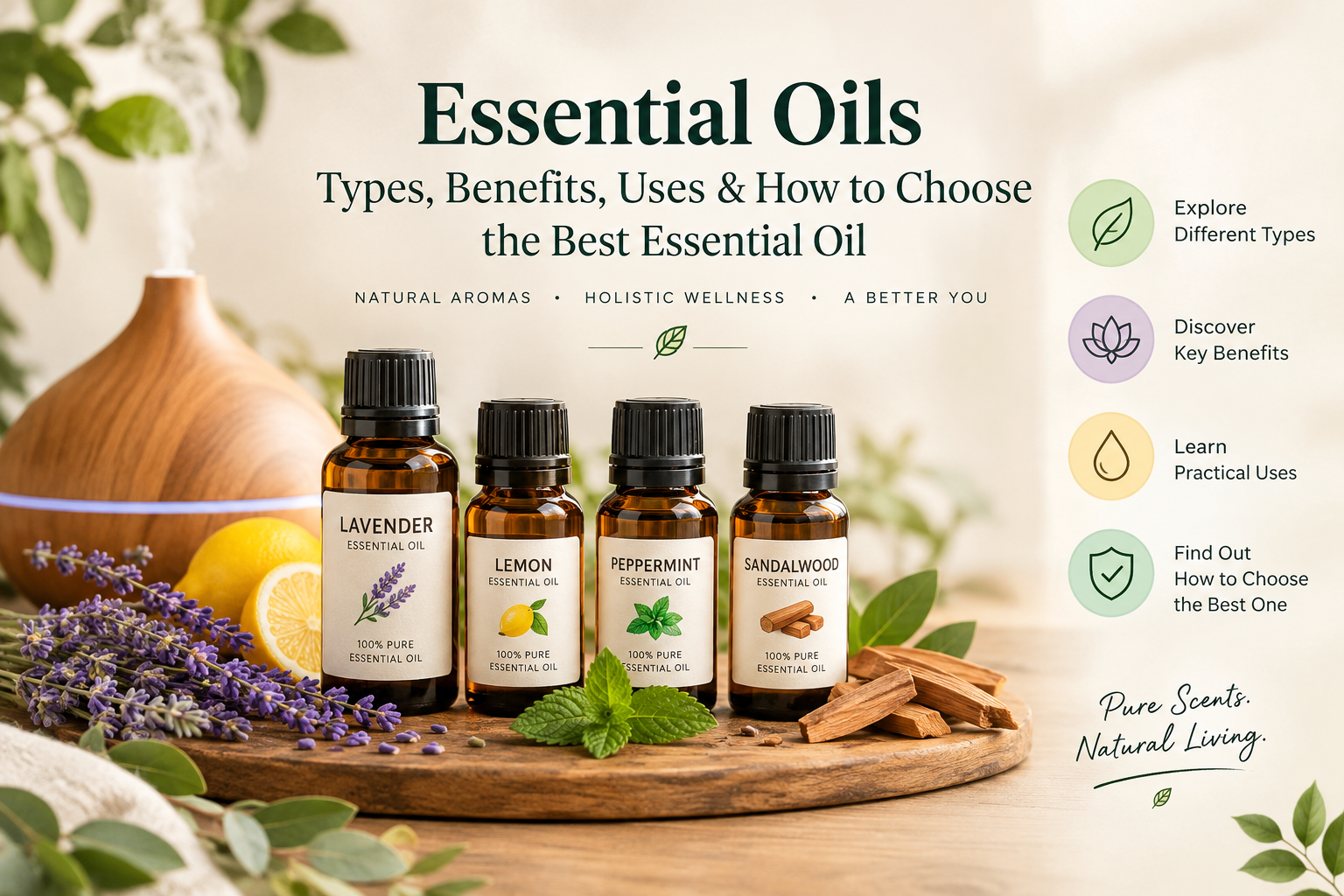
Fragrance has the power to transform a space, create a relaxing atmosphere, and make everyday routines feel more enjoyable. From the refreshing aroma of citrus to the warm, woody notes of sandalwood, essential oils have become a popular choice for people who enjoy natural fragrances and aromatherapy-inspired lifestyles. They are widely used in home fragrance, massage products, personal care routines, and diffusers.
Essential Oils are concentrated aromatic extracts obtained from different parts of plants, including flowers, leaves, bark, roots, peels, and seeds. Each oil has its own fragrance profile, characteristics, and potential uses. Some are known for their fresh and uplifting aromas, while others offer calming, earthy, or floral scents.
However, choosing the right oil involves more than simply finding a fragrance you like. Understanding the different types, benefits, uses, and quality indicators can help you make an informed decision. Whether you are exploring aromatherapy for the first time or looking for the Best Essential Oils for your home, this guide will help you understand what to look for.
Essential oils are concentrated plant extracts that contain naturally occurring aromatic compounds. They are generally obtained through methods such as steam distillation or cold pressing, depending on the plant material.
For example, lavender oil is commonly extracted from lavender flowers, while lemon oil is usually obtained from lemon peels. Peppermint oil comes from the peppermint plant, and sandalwood oil is derived from the heartwood of sandalwood trees.
These oils are valued for their distinctive aromas and are used in various products, including essential oil diffusers, candles, bath products, massage blends, and personal care formulations.
It is important to remember that essential oils are highly concentrated. Natural origin does not automatically make an oil safe for every person or every application. Choosing a suitable product and following appropriate usage instructions are essential.
Different essential oils offer different fragrance experiences. Understanding their characteristics can help you select oils that suit your preferences and intended use.
Lavender essential oil is known for its soft, floral, and slightly herbal aroma. It is a popular choice for evening routines, relaxation-inspired spaces, and bedroom diffusers.
Its gentle fragrance works well on its own or when blended with citrus, cedarwood, and other floral oils. Many people enjoy lavender as part of a calming atmosphere, although fragrance alone cannot guarantee better sleep or treat sleep disorders.
Peppermint oil has a cool, minty, and refreshing scent. It is often used in personal care formulations, aromatic blends, and products designed to create a fresh environment.
Its strong fragrance pairs well with eucalyptus, lemon, and rosemary. Because peppermint oil is concentrated, it should be handled carefully, especially around young children and pets.
Lemon essential oil offers a bright, zesty, and clean fragrance. It is frequently chosen for living rooms, workspaces, and daytime diffuser blends.
Its fresh citrus notes combine well with lavender, peppermint, and other citrus oils. Some cold-pressed citrus oils can increase skin sensitivity to sunlight, so always check the specific product's safety information before applying them to skin.
Eucalyptus oil has a crisp, fresh, and camphoraceous aroma. It is commonly used in aromatic blends, personal care products, and fragrance applications.
Its distinctive scent pairs well with peppermint and rosemary. However, eucalyptus oil can be toxic if swallowed and requires particular caution around children. It should never be used as a substitute for medical treatment.
Rosemary essential oil has a fresh, herbal, and slightly woody fragrance. It is popular in hair-care formulations and aromatic blends.
Some people use rosemary-scented products as part of their grooming routines. However, the effects of rosemary essential oil depend on the formulation and application, and it should not be assumed to promote hair growth or treat scalp conditions without appropriate evidence.
Sandalwood essential oil is appreciated for its warm, smooth, creamy, and woody aroma. It is frequently used in perfumery, meditation-inspired fragrance blends, and premium home fragrance products.
Its rich scent pairs beautifully with floral, spicy, and citrus notes. If sustainability matters to you, check the botanical source and responsible sourcing information before purchasing sandalwood oil.
Frankincense essential oil has a resinous, woody, and slightly spicy aroma. It is often used in meditation spaces, fragrance blends, and relaxing home environments.
It can be blended with lavender, cedarwood, and citrus oils to create a balanced fragrance. As with other essential oils, claims about medical or therapeutic effects should be evaluated carefully rather than assumed from traditional use alone.
Essential oils offer several practical benefits when selected and used appropriately.
One of the most popular uses of essential oils is home fragrance. Diffusing a suitable oil can introduce fresh, floral, herbal, or woody notes into a room, making the environment feel more inviting.
Certain fragrances, including lavender and some woody aromas, are commonly incorporated into relaxation routines. A pleasant scent may help some people feel more comfortable, although responses vary and aromatherapy is not a replacement for professional mental health care.
Essential oils are available in a wide range of fragrance profiles. You can choose citrus oils for bright aromas, floral oils for softer scents, or woody oils for a warm and grounded atmosphere.
Essential oils can be combined to create personalised aromatic blends. For example, lemon and lavender can create a fresh floral-citrus profile, while cedarwood and frankincense offer a deeper, woody aroma.
Blending should be done according to suitable dilution and safety guidance.
Some essential oils are used as ingredients in professionally formulated soaps, shampoos, massage oils, and skincare products. However, concentrated oils should not be applied directly to the skin without appropriate dilution, and some oils may cause irritation or allergic reactions.
Essential oils can be incorporated into everyday routines in several ways, depending on the product and its intended application.
Never ingest essential oils unless specifically directed by a qualified healthcare professional with appropriate expertise. Keep them away from the eyes, store them securely, and avoid diffusing them around pets or people who may be sensitive to airborne fragrances.
With so many products available, selecting the right option can feel confusing. The following factors can help you make a more informed choice.
Look for products that clearly identify the oil, its botanical name, ingredients, and intended use. The term Pure Essential Oils generally indicates oils without intentionally added fragrance ingredients, but marketing terms alone do not establish quality.
Review the label and look for reliable information about sourcing, extraction methods, and quality testing. A certificate of analysis or appropriate testing documentation can provide additional information when available.
Your preferred fragrance should guide your selection. Floral oils such as lavender offer a softer scent, citrus oils provide freshness, and woody oils such as sandalwood create a warmer fragrance experience.
Consider where and how you plan to use the oil before purchasing it.
Not every essential oil is suitable for every use. An oil intended for diffusion may not be appropriate for direct skin application. Always check the label for permitted uses, dilution instructions, and warnings.
Essential oils are often sold in dark glass bottles to help protect them from light exposure. Check that the bottle is properly sealed and includes clear labelling.
Store oils according to the manufacturer's instructions, away from heat, sunlight, children, and pets.
The cheapest product is not necessarily the best value, and a high price does not guarantee superior quality. Compare botanical identity, ingredient transparency, packaging, testing information, and suitability for your intended use.
Choose suppliers that provide clear product descriptions, transparent ingredient information, and appropriate safety guidance. Avoid products that make exaggerated claims about curing diseases or delivering guaranteed health benefits.
Although essential oils come from plants, their concentrated nature means that careful use is important.
Following these precautions can help you enjoy aromatic products more responsibly.
Essential oils offer a diverse range of aromas, from refreshing lemon and peppermint to floral lavender and warm sandalwood. Their versatility makes them popular for home fragrance, diffuser blends, personal care formulations, and relaxation-inspired routines.
When searching for the Best Essential Oils, focus on fragrance preference, ingredient transparency, product quality, intended application, and safety instructions. Choosing Pure Essential Oils from a reliable supplier can help you understand what you are buying and how to use it appropriately.
Whether you prefer bright citrus notes, refreshing herbal scents, or rich woody fragrances, the right essential oil can become a useful addition to your fragrance routine. Take time to explore different varieties, check product information carefully, and choose oils that suit your needs and lifestyle.
1. What are essential oils used for?
Essential oils are commonly used in diffusers, home fragrance blends, massage formulations, and personal care products. Their suitability depends on the specific oil and its intended application.
2. Which are the best essential oils for beginners?
Lavender, lemon, and certain other familiar oils are popular starting points because of their recognisable fragrance profiles. Always check safety information before using any oil.
3. How can I identify pure essential oils?
Check the botanical name, ingredient list, extraction information, supplier transparency, and available quality-testing documentation. The word “pure” on a label alone is not proof of authenticity.
4. Can essential oils be used directly on the skin?
Most concentrated essential oils should not be applied directly to the skin. Use an appropriate dilution and confirm that the particular oil is suitable for topical use.
5. Can essential oils be used every day?
Some products may be suitable for regular use when used as directed. Follow the product instructions, ensure adequate ventilation when diffusing, and discontinue use if irritation or sensitivity occurs.

Discover the world of **diffuser oils** and learn about their types, benefits, uses, and fragrance options. From floral and citrus to woody and herbal scents, explore how **aromatherapy diffuser oils** can create a pleasant and relaxing atmosphere at home. Learn how to choose the **best diffuser oils** based on fragrance, room, ingredients, and personal preferences.

Discover how **Home Fragrance Diffusers** can transform your living space with long-lasting and inviting aromas. Learn about different types of **Fragrance Diffusers**, popular fragrance options, their benefits, and how they can enhance your home’s ambience. From reed and ultrasonic diffusers to floral, woody, citrus, and fresh fragrances, explore the options available for every room. Find simple tips to choose the **Best Diffuser for Home** based on your space, fragrance preference, and lifestyle.

Discover how **Room Sprays** can refresh your home with pleasant and inviting fragrances. Learn about the benefits, popular scents, everyday uses, and tips for choosing the **Best Room Sprays** for different spaces. From floral and citrus to woody and herbal fragrances, find out how a **Room Freshener Spray** can enhance your indoor atmosphere. Explore simple ways to choose and use room sprays for a fresher, more comfortable home.


