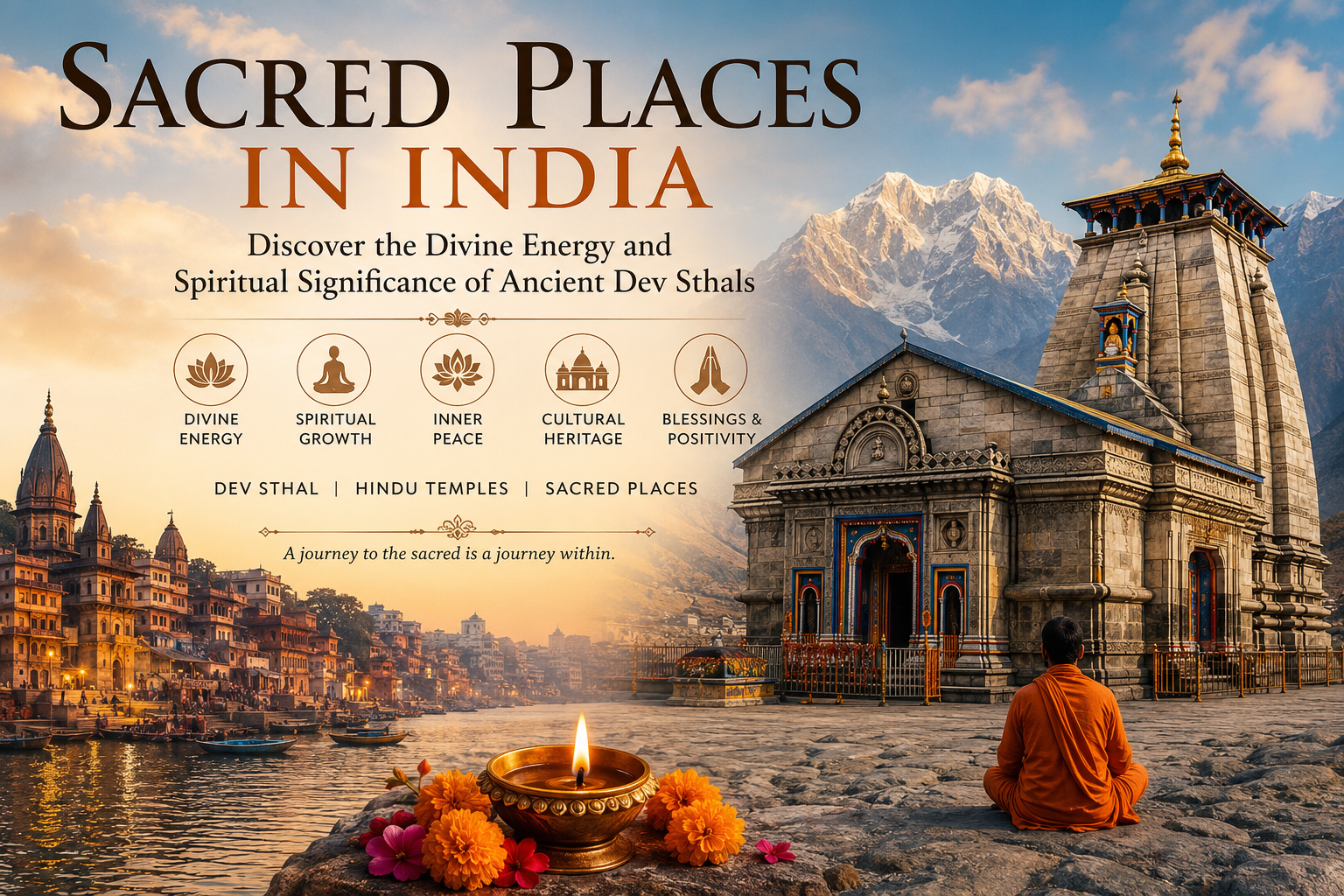
India is a land where spirituality is woven into everyday life. From the snow-capped Himalayas to the serene southern coast, countless Dev Sthal sites have inspired devotion, meditation, and self-discovery for thousands of years. These sacred destinations are more than architectural marvels—they are places where faith, history, culture, and divine energy come together.
Whether you are a pilgrim seeking blessings or a traveler looking for inner peace, visiting India's Hindu Temples and Sacred Places offers an unforgettable spiritual experience. Every temple, shrine, and holy site has its own story, traditions, and spiritual significance that continue to inspire millions of devotees every year.
In this guide, we'll explore what makes these ancient Dev Sthals so special, why they remain important today, and the many benefits of embarking on a spiritual journey across India.
The term Dev Sthal refers to a sacred place dedicated to divine worship. It may include ancient temples, pilgrimage centers, holy rivers, mountain shrines, or spiritual sites believed to be blessed by gods, saints, or sages.
Unlike ordinary tourist attractions, Dev Sthals are places where people visit to pray, meditate, seek guidance, and strengthen their spiritual connection. Many of these sites have been places of worship for centuries and continue to preserve India's rich religious heritage.
These sacred locations are known for their peaceful atmosphere, traditional rituals, and timeless architecture that reflects India's incredible craftsmanship.
Hindu Temples are not simply buildings constructed for worship. According to ancient traditions, they are designed using sacred architectural principles that help create a positive flow of spiritual energy.
Every part of a temple carries symbolic meaning:
Many devotees believe that visiting temples regularly brings mental clarity, emotional balance, and spiritual strength.
One reason Sacred Places continue attracting millions of visitors is the belief that centuries of continuous worship create powerful spiritual vibrations.
Daily rituals, Vedic chants, devotional music, meditation, and festivals fill these locations with an atmosphere that feels peaceful and uplifting.
Whether it's an ancient Shiva temple, a Vishnu shrine, or a Devi temple, devotees often describe experiencing:
While everyone's spiritual experience is personal, many visitors leave these places feeling refreshed and inspired.
India is home to thousands of sacred destinations, each with unique traditions and historical importance.
Some of the most well-known Dev Sthals include:
Nestled in the Himalayas, Kedarnath is one of the holiest Shiva temples and part of the Char Dham Yatra.
Located in Varanasi, this ancient temple dedicated to Lord Shiva is considered one of the most sacred pilgrimage destinations in Hinduism.
Dedicated to Lord Vishnu, Badrinath welcomes thousands of devotees seeking spiritual blessings amidst breathtaking Himalayan scenery.
Famous for the Rath Yatra festival, this temple represents centuries of devotion and cultural heritage.
Known for its spiritual significance and connection with the Ramayana, Rameswaram remains one of India's most important pilgrimage sites.
Situated in the Trikuta Hills, this shrine attracts millions of pilgrims every year who undertake the sacred trek with immense faith.
Each of these sacred locations offers a unique spiritual experience while showcasing India's diverse religious traditions.
Traveling to Sacred Places offers more than religious fulfillment. Many people experience emotional, mental, and even physical benefits during their spiritual journeys.
Temple surroundings naturally encourage silence, meditation, and mindfulness, helping visitors relax and reduce stress.
Regular visits to Dev Sthal locations strengthen one's connection with faith and encourage self-reflection.
Ancient temples preserve India's history through inscriptions, architecture, sculptures, and rituals that have survived for centuries.
Many devotees believe that spending time in sacred environments helps remove negative thoughts and promotes optimism.
Pilgrimages often become meaningful family experiences where generations come together to share traditions and create lasting memories.
Prayer, meditation, and devotional practices help calm the mind and improve emotional well-being.
Every Dev Sthal follows traditions that have been passed down for generations.
Common rituals include:
Participating in these rituals helps devotees feel connected to centuries-old spiritual practices while fostering gratitude and devotion.
Ancient Hindu Temples are masterpieces of engineering and spiritual symbolism.
Their intricate carvings, towering shikharas, beautifully sculpted pillars, and sacred geometry demonstrate extraordinary craftsmanship.
Many temples were built according to Vastu Shastra and ancient architectural sciences, ensuring harmony between nature, energy, and worship.
Even today, visitors admire these temples not only for their religious significance but also for their artistic brilliance.
To make your spiritual journey meaningful, follow these simple guidelines:
Being mindful of these practices enhances both your experience and the sanctity of the place.
Ancient Dev Sthals are invaluable treasures that connect present generations with India's spiritual roots.
Conservation efforts by local communities, temple authorities, and heritage organizations play a crucial role in protecting these sacred monuments from environmental damage and urbanization.
Visitors can also contribute by respecting temple rules, supporting responsible tourism, and helping preserve the cultural heritage for future generations.
Whether you seek divine blessings, cultural enrichment, or personal transformation, visiting India's Dev Sthal destinations offers an experience unlike any other.
The combination of sacred rituals, centuries-old traditions, remarkable architecture, and peaceful surroundings creates memories that stay with visitors for a lifetime.
India's Hindu Temples continue to inspire millions with their timeless wisdom, spiritual energy, and unwavering faith. Exploring these Sacred Places is not merely a journey across geographical locations—it is a journey inward toward peace, devotion, and self-discovery.
If you're planning your next spiritual adventure, let India's ancient Dev Sthals guide you toward a deeper connection with its rich cultural heritage and divine traditions.

Discover the benefits of Alcohol-Free Attar and explore a variety of fragrances to suit your personal style. Learn about popular attar types, including floral, woody, musk, aquatic, gourmand, and herbal scents. Find helpful tips for choosing the Best Alcohol-Free Attar for everyday wear and special occasions. Understand what affects fragrance longevity and how to make your attar last longer. Explore the world of traditional fragrance oils with Totally Indian and find a scent that matches your preferences.

Discover how to choose the best fragrance with this complete guide to perfumes, attars and fragrance notes. Learn about popular scent families, fragrance longevity, everyday fragrance choices and practical tips to find a scent that suits your personality and lifestyle. Explore fragrance options with Totally Indian and make your next fragrance purchase with confidence.

Discover how to choose the best baby care products for newborns, from gentle baby lotion and mild cleansers to massage oils and diaper care essentials. Explore practical skincare tips, ingredient advice, and a simple newborn care checklist to help new parents make informed choices.


