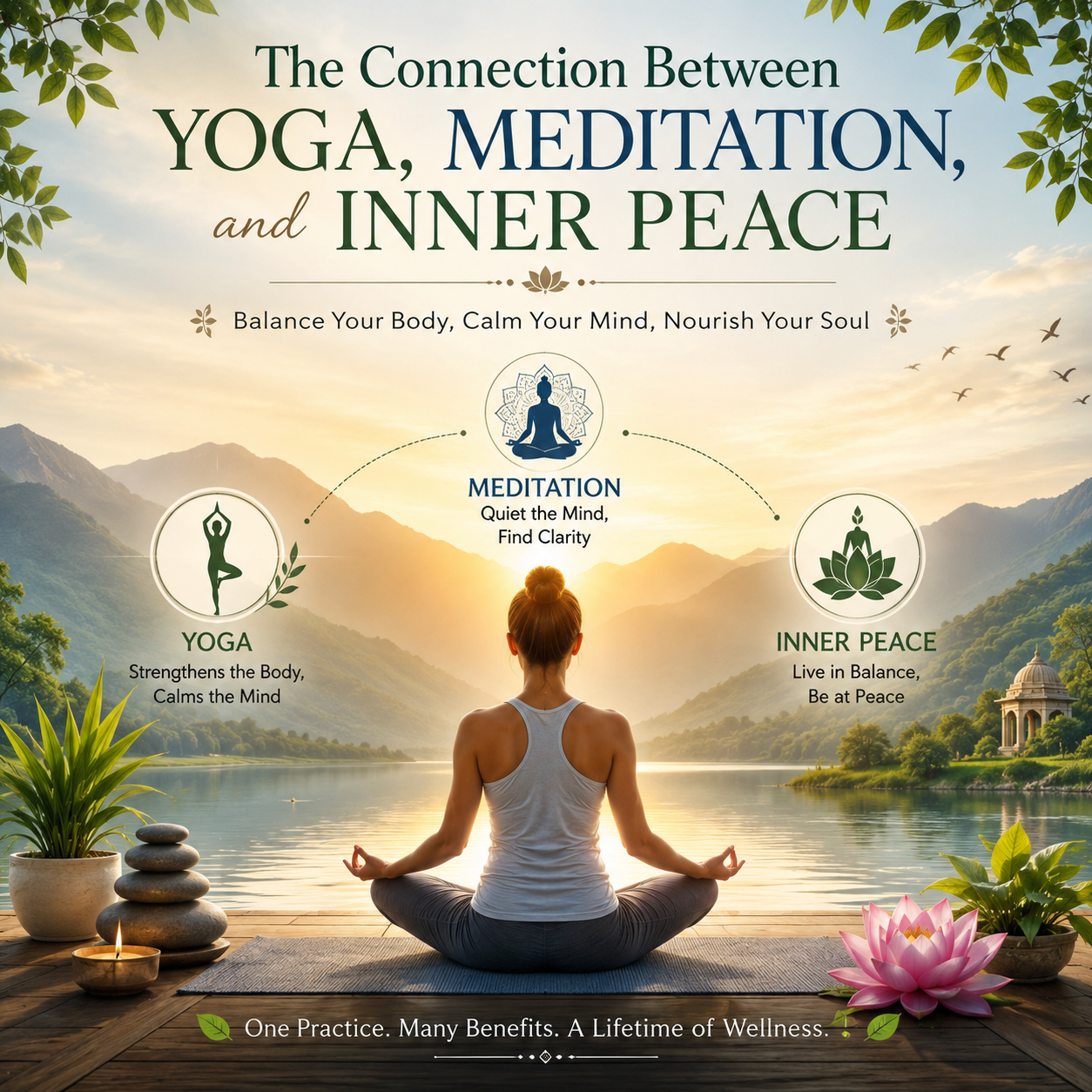
In today's fast-paced world, stress, anxiety, and mental exhaustion have become a part of everyday life. People are constantly searching for natural ways to improve their mental health, emotional balance, and overall well-being. This is where Yoga and Meditation come into the picture. Together, these ancient practices offer a powerful path toward achieving Inner Peace, helping individuals find harmony between the body, mind, and soul.
Whether you are just beginning your wellness journey or have been practicing for years, understanding the connection between Yoga, Meditation, and Inner Peace can transform your life in meaningful ways.
Yoga is an ancient Indian practice that combines physical postures (asanas), breathing techniques (pranayama), and mindfulness to promote overall health. It is much more than a physical workout—it is a complete lifestyle that encourages self-awareness, discipline, and inner balance.
Regular Yoga practice helps strengthen muscles, improve flexibility, enhance posture, and boost overall physical fitness. More importantly, it calms the nervous system, preparing the mind for deeper Meditation.
Meditation is the practice of training the mind to focus, relax, and become fully present in the moment. Unlike common misconceptions, Meditation is not about stopping thoughts completely. Instead, it teaches you to observe your thoughts without judgment and return your attention to your breath or a chosen point of focus.
Daily Meditation helps reduce mental clutter, improves concentration, enhances emotional resilience, and promotes Inner Peace by calming the mind.
Inner Peace is a state of mental and emotional calmness where you remain balanced despite life's challenges. It doesn't mean life becomes free from problems. Instead, it means developing the ability to respond to situations with clarity, patience, and confidence rather than stress or fear.
People who experience Inner Peace often enjoy:
Yoga and Meditation complement each other perfectly. Yoga prepares the body by releasing tension, improving blood circulation, and calming the nervous system.
Once the body becomes relaxed, Meditation becomes easier because the mind is less distracted by physical discomfort.
This powerful combination creates a balanced approach to wellness:
Instead of treating them as separate practices, many wellness experts recommend combining both for maximum physical and mental benefits.
Modern scientific research continues to support what ancient traditions have known for centuries.
Regular Yoga and Meditation practice can:
These benefits contribute directly to achieving lasting Inner Peace and better overall health.
Yoga encourages deep breathing and mindful movement, helping relax both the body and mind. Even a 20-minute session can significantly reduce daily stress.
Regular Yoga enhances muscle flexibility, balance, and joint mobility while strengthening the entire body.
By focusing on breathing and movement, Yoga helps clear mental distractions and improves concentration.
Instead of draining energy like intense workouts, Yoga leaves you feeling refreshed and revitalized.
Many Yoga poses relax the nervous system, making it easier to fall asleep and enjoy deeper, more restful sleep.
Meditation trains the brain to remain attentive, helping improve productivity at work and in daily life.
People who meditate regularly become more aware of their emotions and react more calmly to stressful situations.
Mindfulness Meditation helps interrupt cycles of overthinking, reducing anxiety and mental fatigue.
Meditation helps shift attention away from negative thoughts toward gratitude, acceptance, and optimism.
The more you meditate, the more you understand your thoughts, emotions, and behavioral patterns.
Yoga creates Inner Peace by encouraging mindfulness during movement. Every posture teaches patience, balance, and awareness. Instead of rushing through life, practitioners learn to stay present in each moment.
Breathing exercises also activate the parasympathetic nervous system, helping reduce stress and create feelings of relaxation and calm.
Over time, Yoga transforms not only the body but also the way we respond to life's challenges.
Meditation allows you to observe thoughts without becoming overwhelmed by them.
Rather than reacting emotionally, you learn to respond thoughtfully.
This practice gradually reduces:
As mental noise decreases, a deeper sense of Inner Peace naturally emerges.
If you're new to Yoga and Meditation, start small.
Morning (15–20 Minutes)
Evening (10 Minutes)
Consistency matters more than duration. Even 20–30 minutes daily can produce noticeable improvements over time.
Reality: Yoga is a complete mind-body practice that includes breathing, mindfulness, and self-awareness.
Reality: Meditation teaches awareness, not the complete absence of thoughts.
Reality: Even 10–20 minutes of consistent practice can provide remarkable benefits.
The journey toward Inner Peace begins with small daily choices. By combining Yoga and Meditation, you create a powerful foundation for physical health, emotional stability, and mental clarity. These ancient practices are not temporary wellness trends—they are lifelong tools that help you navigate modern life's challenges with confidence and calmness.
Whether your goal is reducing stress, improving focus, enhancing emotional well-being, or simply finding more joy in everyday life, Yoga and Meditation offer a natural and effective path forward. Start today with just a few mindful breaths and gentle stretches, and gradually experience the transformative power of Inner Peace.

Discover the benefits of Alcohol-Free Attar and explore a variety of fragrances to suit your personal style. Learn about popular attar types, including floral, woody, musk, aquatic, gourmand, and herbal scents. Find helpful tips for choosing the Best Alcohol-Free Attar for everyday wear and special occasions. Understand what affects fragrance longevity and how to make your attar last longer. Explore the world of traditional fragrance oils with Totally Indian and find a scent that matches your preferences.

Discover how to choose the best fragrance with this complete guide to perfumes, attars and fragrance notes. Learn about popular scent families, fragrance longevity, everyday fragrance choices and practical tips to find a scent that suits your personality and lifestyle. Explore fragrance options with Totally Indian and make your next fragrance purchase with confidence.

Discover how to choose the best baby care products for newborns, from gentle baby lotion and mild cleansers to massage oils and diaper care essentials. Explore practical skincare tips, ingredient advice, and a simple newborn care checklist to help new parents make informed choices.


