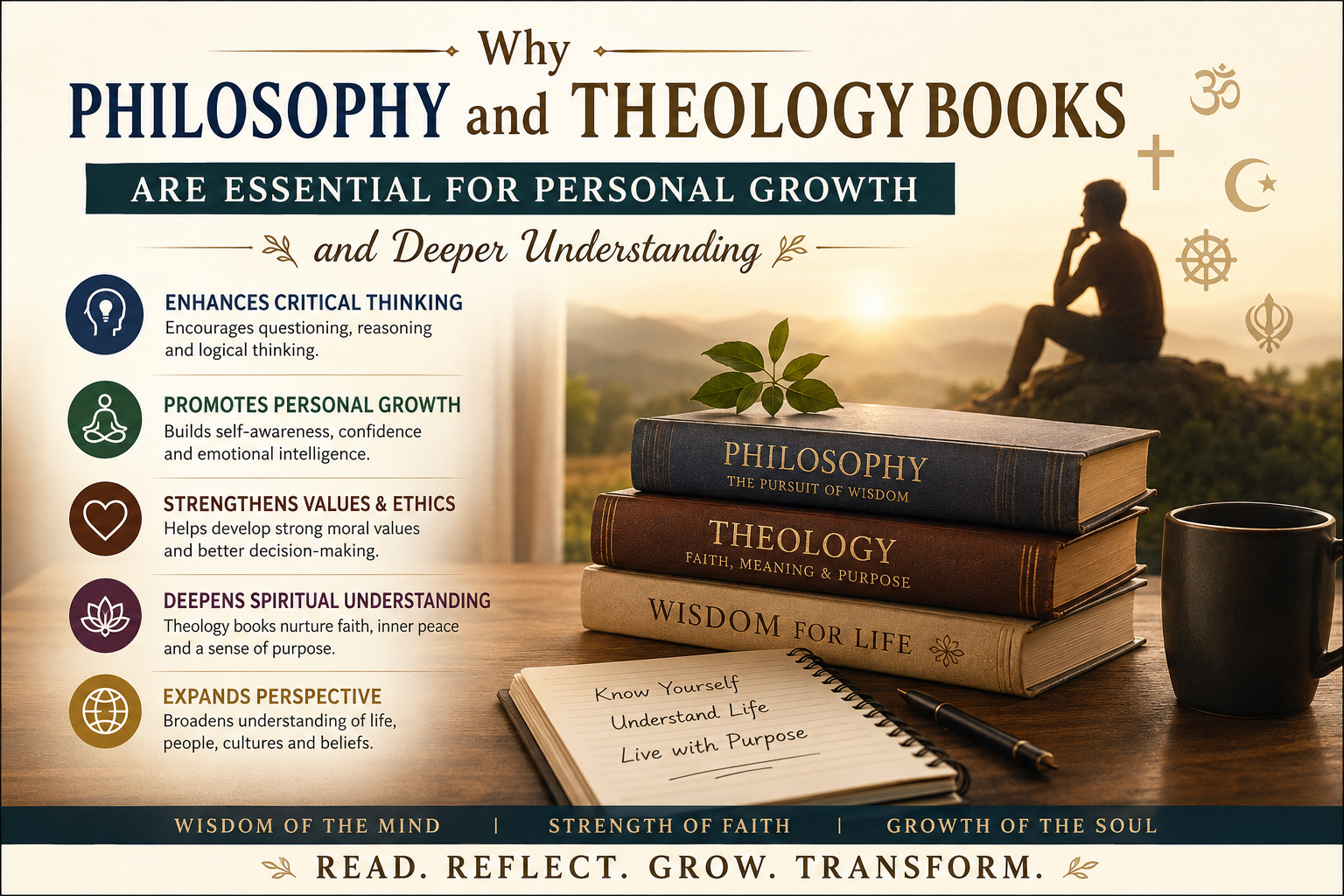
In today's fast-paced world, people often focus on career success, financial stability, and technological advancement. However, true fulfillment comes from understanding ourselves, our purpose, and the world around us. This is where Philosophy Books and Theology Books play a vital role. These books encourage readers to think deeply, question assumptions, develop wisdom, and strengthen their values.
Whether you're seeking answers about life, spirituality, ethics, or personal transformation, reading Philosophy and Theology literature can significantly contribute to Personal Growth. They help individuals build emotional intelligence, critical thinking skills, and a greater appreciation for different cultures, beliefs, and perspectives.
In this blog, we'll explore why Philosophy and Theology Books remain timeless resources for self-discovery and how they can positively influence every aspect of your life.
Philosophy Books explore life's biggest questions:
Philosophy encourages logical thinking rather than accepting ideas without questioning them. Great philosophers throughout history have inspired generations to think independently and make better decisions.
Popular topics in Philosophy include:
These books don't always provide direct answers—they teach readers how to ask better questions.
While Philosophy focuses on reasoning and logic, Theology Books explore spirituality, faith, religion, and humanity's relationship with the divine.
They help readers understand:
Whether someone follows Hinduism, Christianity, Islam, Buddhism, Sikhism, or simply enjoys learning about spirituality, Theology Books provide meaningful insights into beliefs that have shaped civilizations for thousands of years.
Although Philosophy and Theology approach life differently, they often complement one another.
| Philosophy Books, Theology Books | |
| Focus on logic and reasoning | Focus on faith and spirituality |
| Ask questions | Explore divine answers |
| Encourage critical thinking | Encourage spiritual understanding |
| Based on human reasoning | Based on religious teachings |
| Study ethics through logic | Study ethics through faith |
Together, they create a balanced understanding of both the mind and the soul.
One of the greatest benefits of reading Philosophy Books is developing critical thinking skills.
Instead of accepting information blindly, readers learn to:
These skills are valuable in education, business, leadership, and everyday decision-making.
Many philosophical works discuss emotions, relationships, happiness, suffering, and resilience.
Readers become more aware of:
This contributes significantly to long-term Personal Growth.
Many people struggle with questions like:
Philosophy Books encourage self-reflection and help readers discover their own values instead of simply following societal expectations.
Every day we face choices.
Philosophical thinking teaches us to evaluate consequences, ethics, and long-term outcomes before making decisions.
This leads to wiser personal and professional choices.
One of the biggest reasons people read Theology Books is to deepen their relationship with faith and spirituality.
These books explain:
Readers gain clarity about their beliefs while respecting others.
Regardless of religion, Theology Books commonly teach values such as:
These principles contribute to stronger families, healthier communities, and meaningful lives.
Life includes challenges, uncertainty, and loss.
Theology Books often provide comfort by encouraging hope, patience, faith, and resilience.
Many readers turn to spiritual literature during stressful periods because it offers emotional strength beyond practical solutions.
The combination of Philosophy and Theology creates a powerful foundation for lifelong learning.
Philosophy asks:
"Why?"
Theology often asks:
"What does faith teach us?"
Together they encourage readers to balance reason with spirituality.
This combination helps develop:
These characteristics are essential for meaningful Personal Growth.
Readers become more analytical and thoughtful.
Logical reasoning combined with ethical understanding leads to better choices.
Understanding personal beliefs and values builds confidence.
Reading about human experiences helps regulate emotions.
Theology provides guidance for living with purpose and faith.
Learning about different philosophies and religions promotes respect and open-mindedness.
Both subjects inspire continuous curiosity and intellectual development.
These books are suitable for everyone, including:
Even beginners can start with introductory books before exploring more advanced works.
If you're new to Philosophy or Theology, follow these simple tips:
Choose books that explain concepts in simple language.
Write down meaningful ideas, questions, and reflections.
These books are meant to be understood rather than rushed.
Book clubs or study groups can provide new perspectives.
Knowledge becomes valuable when practiced in real life.
Books have the power to transform thinking.
Regular reading of Philosophy Books encourages intellectual growth, while Theology Books nurture spiritual maturity.
Over time, readers often become:
This transformation doesn't happen overnight, but consistent reading creates lasting positive change.
Unlike books based on temporary trends, Philosophy and Theology have remained relevant for centuries because they address timeless human questions.
Technology changes.
Society changes.
But questions about purpose, morality, happiness, suffering, and faith remain constant.
That is why these books continue to inspire readers across generations.
Whether you're searching for intellectual clarity or spiritual fulfillment, investing time in Philosophy and Theology literature is one of the most rewarding decisions you can make.
In a world filled with constant distractions and information overload, Philosophy Books and Theology Books provide something far more valuable—wisdom. They encourage thoughtful reflection, ethical living, spiritual awareness, and lifelong learning. By combining logical reasoning with spiritual insight, these books help readers cultivate resilience, compassion, and a deeper understanding of themselves and others.
If your goal is meaningful Personal Growth, stronger values, and a clearer sense of purpose, make Philosophy and Theology Books a regular part of your reading journey. Their timeless lessons can enrich your mind, strengthen your character, and guide you toward a more balanced and fulfilling life.

Discover the benefits of Alcohol-Free Attar and explore a variety of fragrances to suit your personal style. Learn about popular attar types, including floral, woody, musk, aquatic, gourmand, and herbal scents. Find helpful tips for choosing the Best Alcohol-Free Attar for everyday wear and special occasions. Understand what affects fragrance longevity and how to make your attar last longer. Explore the world of traditional fragrance oils with Totally Indian and find a scent that matches your preferences.

Discover how to choose the best fragrance with this complete guide to perfumes, attars and fragrance notes. Learn about popular scent families, fragrance longevity, everyday fragrance choices and practical tips to find a scent that suits your personality and lifestyle. Explore fragrance options with Totally Indian and make your next fragrance purchase with confidence.

Discover how to choose the best baby care products for newborns, from gentle baby lotion and mild cleansers to massage oils and diaper care essentials. Explore practical skincare tips, ingredient advice, and a simple newborn care checklist to help new parents make informed choices.


