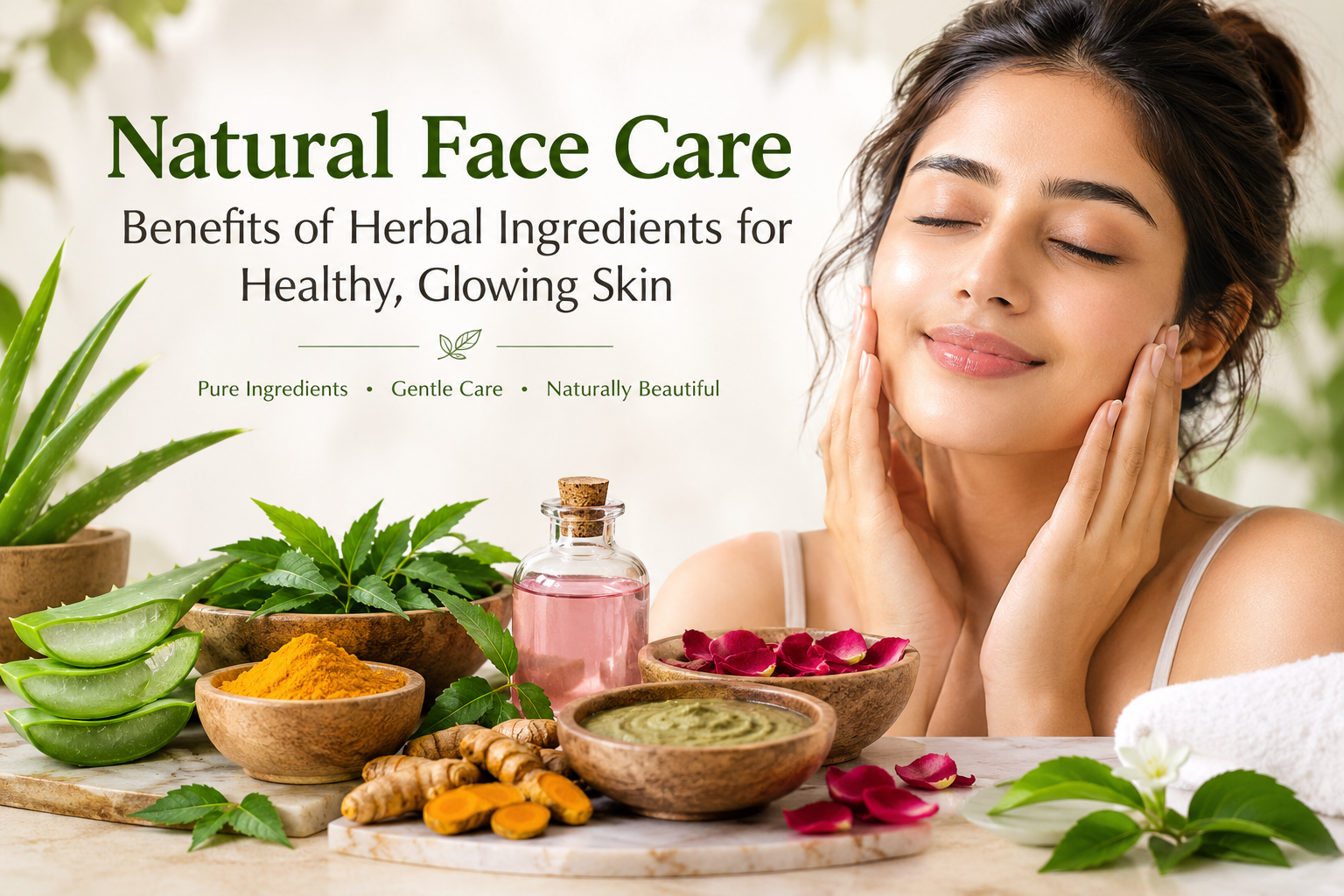
Healthy, glowing skin does not always require a complicated skincare routine. Sometimes, the best approach is to keep things simple and choose skincare products made with ingredients that suit your skin. Natural face care has become increasingly popular among people who want to care for their skin with plant-based ingredients, gentle cleansing, and nourishing skincare habits.
From aloe vera and rose water to turmeric, neem, and sandalwood, herbal ingredients have been used in traditional beauty routines for generations. These ingredients offer different skincare benefits, including hydration, soothing, and helping the skin look fresh and radiant. When used correctly, herbal face care can become a valuable part of your daily beauty routine.
In this guide, we will explore the benefits of natural face care, popular herbal ingredients, and practical ways to achieve glowing skin naturally.
Natural face care involves using skincare products and ingredients derived from natural sources, such as plants, flowers, herbs, and botanical extracts. These products may include face cleansers, moisturisers, face masks, toners, and facial oils.
A natural skincare routine focuses on keeping the skin clean, hydrated, and comfortable without using too many unnecessary products. However, the word “natural” does not automatically mean that a product is suitable for everyone. Some botanical ingredients and essential oils can cause irritation, especially on sensitive skin.
Choosing products according to your skin type and checking their ingredient lists are important steps towards building an effective skincare routine.
Natural face care can support a simple and balanced skincare routine. The benefits depend on the ingredients used, their formulation, and how well they suit your skin.
Hydration is essential for maintaining soft, smooth-looking skin. Ingredients such as aloe vera and certain plant-derived moisturising agents help attract or retain moisture, depending on their formulation.
Well-hydrated skin often looks fresher and feels more comfortable. Using a suitable moisturiser after cleansing can help reduce dryness and support the skin's natural protective barrier.
A dull appearance can sometimes be associated with dryness, dead skin-cell buildup, or environmental exposure. A consistent skincare routine that includes gentle cleansing, moisturising, and sun protection can help the skin look brighter and healthier.
Some botanical ingredients, including licorice-root extract and green tea extract, are used in skincare formulations for their antioxidant or skin-conditioning properties. Their effectiveness depends on the formulation and concentration.
Ingredients such as aloe vera and colloidal oatmeal are commonly used in products designed to soothe dry or uncomfortable skin. A well-formulated herbal face care product may help support skin comfort when it contains ingredients suitable for your skin type.
If your skin is already irritated, avoid experimenting with multiple new products at once. Fragrance, essential oils, and certain plant extracts can also trigger reactions in some people.
Using too many skincare products can make it difficult to understand what works for your skin. Natural face care encourages a more thoughtful approach: choose a gentle cleanser, a suitable moisturiser, and sunscreen for daytime use.
You can add a serum or face mask if it addresses a specific need, but a long routine is not necessary for everyone.
The skin barrier helps retain moisture and protect the skin from external irritants. Gentle cleansing and regular moisturising are important for maintaining this barrier.
Products containing suitable plant oils, emollients, or soothing ingredients may help reduce moisture loss. However, natural ingredients alone cannot guarantee better results; the complete product formulation matters.
Different herbal ingredients offer different benefits. Understanding their uses can help you choose products that match your skincare goals.
Aloe vera is widely used in gels, moisturisers, and soothing skincare products. It can help provide lightweight hydration and is often included in products designed for dry or uncomfortable skin.
Aloe vera gel may suit people who prefer a lightweight texture. Choose a properly formulated product rather than assuming that every product labelled “aloe vera” contains the same concentration or ingredients.
Turmeric has a long history in traditional Indian beauty rituals. It contains curcumin, a compound studied for its antioxidant and anti-inflammatory properties.
Turmeric-inspired skincare products are popular in face masks and cleansing formulations. However, evidence for homemade turmeric treatments as a reliable solution for pigmentation or acne is limited. Turmeric may also stain the skin temporarily or cause irritation in some people.
Neem is traditionally used in Indian skincare, particularly in products intended for oily or blemish-prone skin. Neem extracts appear in cleansers, face masks, and other herbal formulations.
If you have acne-prone skin, choose a product formulated for facial use and avoid harsh scrubbing. Persistent or severe acne may require advice from a dermatologist rather than relying on herbal products alone.
Rose water is commonly used as a facial mist or toner. It can provide a refreshing feeling and may be included in skincare products for light hydration.
If you enjoy using rose water, select a product intended for facial application and check whether it contains added fragrance or alcohol that might irritate your skin.
Sandalwood has a long-standing place in traditional Indian beauty practices. It is used in face packs and skincare products for its fragrance and skin-conditioning appeal.
Commercial sandalwood products vary widely. Avoid applying undiluted sandalwood essential oil directly to your face, and be cautious with homemade pastes if you have sensitive skin.
Green tea extract is used in many modern skincare products because it contains polyphenols, including catechins. These compounds have antioxidant properties and are studied for their potential role in supporting skin health.
A properly formulated green tea serum or moisturiser can complement a daily routine, although it should not replace sunscreen or proven treatments for specific skin conditions.
Consistency matters more than using a large number of products. Follow these basic steps to build a routine that supports healthy-looking skin.
Step 1: Cleanse gently. Use a mild facial cleanser suited to your skin type. Avoid harsh scrubs and excessively hot water, which may contribute to dryness or irritation.
Step 2: Apply a suitable moisturiser. Choose a lightweight moisturiser for oily skin or a richer formula for dry skin. Look for ingredients that help retain moisture and support the skin barrier.
Step 3: Use targeted skincare products if needed. A herbal serum or face mask can be added if it suits your skin and addresses a specific concern. Introduce one new product at a time.
Step 4: Apply sunscreen every morning. Use a broad-spectrum sunscreen with SPF 30 or higher. Sun protection is essential for helping prevent sunburn, premature skin ageing, and the worsening of dark spots.
Step 5: Maintain healthy habits. Get adequate sleep, eat a balanced diet, stay hydrated, and avoid frequently touching or picking at your face.
Choosing the right product is just as important as selecting the right ingredient.
Keep these points in mind when shopping for herbal face care products.
If you experience persistent redness, itching, painful acne, or unexplained pigmentation, consult a qualified dermatologist.
Even well-intentioned skincare habits can cause problems if they are not suited to your skin.
Avoid applying lemon juice, baking soda, or undiluted essential oils directly to your face. These substances can irritate the skin, and citrus ingredients may increase sensitivity to sunlight.
Do not assume that using more product will deliver better results. Excessive exfoliation, frequent face masks, and combining several active ingredients can damage the skin barrier.
Finally, remember that natural face care is not a substitute for sun protection or medical treatment when a skin condition requires professional care.
Natural face care offers a practical way to incorporate botanical ingredients into a simple, consistent skincare routine. Aloe vera, turmeric, neem, rose water, sandalwood, and green tea are popular choices, each with different traditional uses and potential skincare benefits.
The key to glowing skin naturally is to choose well-formulated products that suit your skin type, maintain hydration, cleanse gently, and use sunscreen every day. Natural ingredients can complement these habits, but they are not guaranteed solutions for every skin concern.
Explore face care products available at Totally Indian to discover skincare options that fit your routine and personal preferences. With informed choices and consistent care, you can work towards skin that looks healthy, fresh, and naturally radiant.

Discover the world of Essential Oils and explore their different types, benefits, and everyday uses. From refreshing lemon and peppermint to calming lavender and warm sandalwood, learn how different fragrances can enhance your home and personal care routines. This guide explains the benefits of essential oils, their common applications, and important safety precautions. Find out how to identify Pure Essential Oils by checking ingredients, quality, and product information. Learn how to choose the Best Essential Oils to suit your fragrance preferences, lifestyle, and needs.

Discover the world of **diffuser oils** and learn about their types, benefits, uses, and fragrance options. From floral and citrus to woody and herbal scents, explore how **aromatherapy diffuser oils** can create a pleasant and relaxing atmosphere at home. Learn how to choose the **best diffuser oils** based on fragrance, room, ingredients, and personal preferences.

Discover how **Home Fragrance Diffusers** can transform your living space with long-lasting and inviting aromas. Learn about different types of **Fragrance Diffusers**, popular fragrance options, their benefits, and how they can enhance your home’s ambience. From reed and ultrasonic diffusers to floral, woody, citrus, and fresh fragrances, explore the options available for every room. Find simple tips to choose the **Best Diffuser for Home** based on your space, fragrance preference, and lifestyle.


