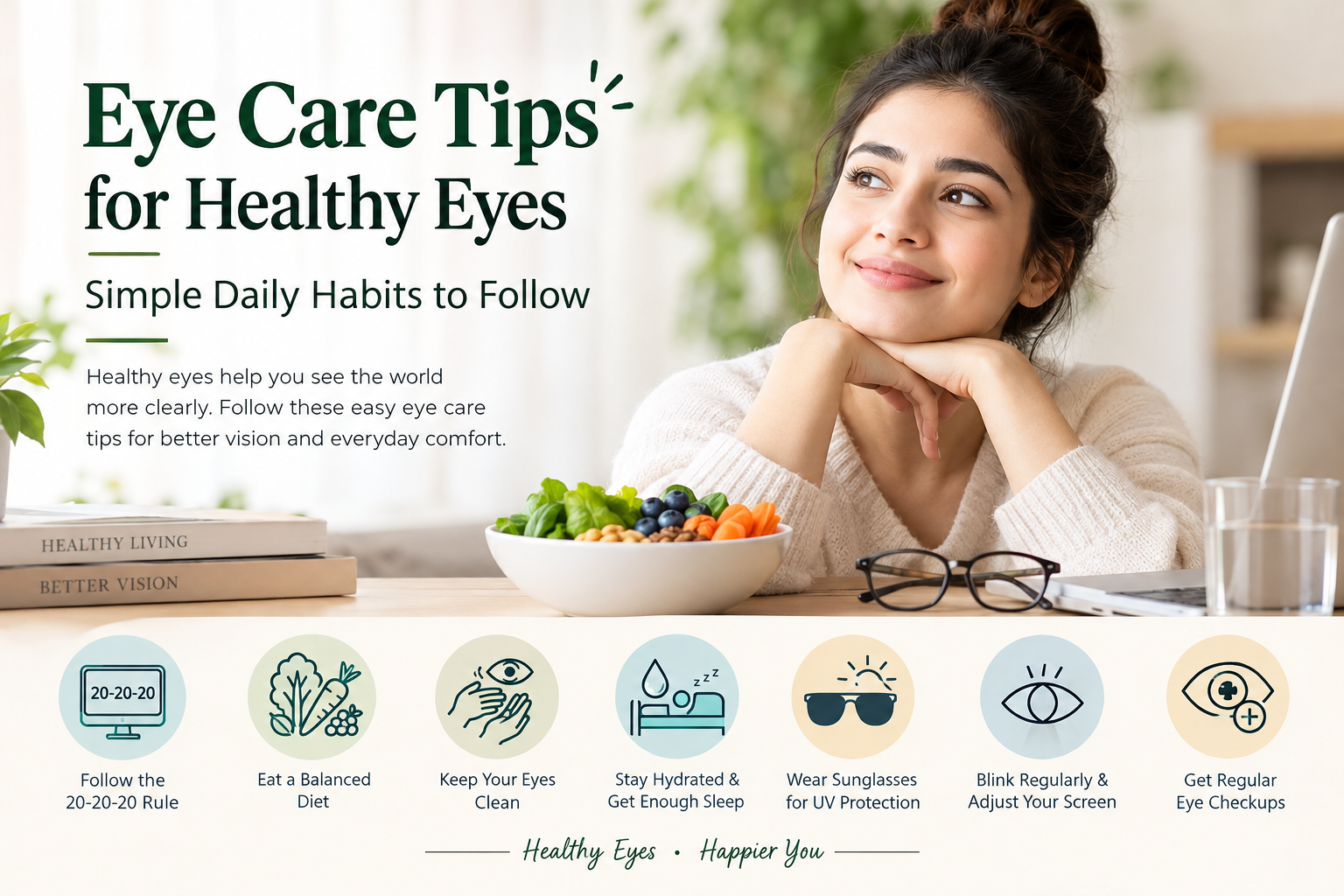
Our eyes play an important role in almost everything we do, from reading and working to enjoying the world around us. However, busy schedules, long hours in front of screens, inadequate sleep, and poor lifestyle habits can sometimes affect our eye comfort and overall vision. This is why following simple eye care tips every day is essential for maintaining healthy eyes.
Good eye care does not always require complicated routines or expensive products. Small changes, such as eating a balanced diet, taking regular screen breaks, getting enough sleep, and scheduling routine eye examinations, can help support long-term eye health.
In this blog, we will explore practical eye care habits, the benefits of maintaining healthy eyes, and simple ways to protect your vision in everyday life.
Eye care is an important part of overall health. Our eyes help us understand our surroundings, perform daily activities, and stay connected with the people and places we love. Taking care of them can help reduce discomfort, support visual function, and identify potential problems early.
Modern lifestyles often involve spending several hours using mobile phones, laptops, televisions, and other digital devices. Prolonged screen use may cause digital eye strain, leading to tired eyes, headaches, blurred vision, or dryness.
Developing a consistent eye care routine can help manage these everyday challenges. It is also important to remember that healthy habits cannot prevent every eye condition, making professional eye examinations an essential part of vision care.
One of the easiest eye care tips to follow is the 20-20-20 rule. When working on a computer or using a digital device, take a break every 20 minutes and look at something approximately 20 feet away for at least 20 seconds.
This simple habit encourages you to shift your focus regularly and may help reduce digital eye strain.
You can also make screen time more comfortable by adjusting your screen brightness, increasing text size when necessary, and keeping your monitor at a comfortable viewing distance.
Benefits:
A nutritious diet plays an important role in maintaining healthy eyes. Certain vitamins, minerals, and antioxidants support normal eye function and help maintain the health of eye tissues.
Include a variety of nutrient-rich foods in your daily meals, such as:
Eating a balanced diet is generally a better starting point than taking supplements without advice. Vitamin supplements are not necessary for everyone, and high doses of certain nutrients may be harmful.
Maintaining good hygiene is another important part of everyday eye care. Dust, sweat, makeup residue, and dirty hands can irritate the delicate area around your eyes.
Wash your hands before touching your eyes, applying eye products, or handling contact lenses. Remove eye makeup gently before sleeping, and avoid sharing eye makeup, towels, or personal eye-care items.
If your eyes feel itchy, try not to rub them. Rubbing may worsen irritation and can potentially injure the surface of the eye.
For contact lens users, follow the recommended cleaning and replacement instructions. Never use tap water to clean contact lenses or their storage case.
Water supports normal body functions, while adequate sleep gives your eyes time to rest after a busy day. Not drinking enough fluids and getting insufficient sleep may contribute to discomfort, tiredness, or a dry-eye sensation in some people.
Make water a regular part of your daily routine and aim for a consistent sleep schedule. Most adults benefit from approximately seven to nine hours of sleep each night, although individual needs can vary.
If you frequently wake up with red, painful, or unusually dry eyes, do not assume that tiredness is the only cause. Persistent symptoms should be discussed with an eye-care professional.
Sun protection is not just about protecting your skin. Ultraviolet (UV) radiation can also affect your eyes, so wearing suitable sunglasses outdoors is an important preventive habit.
Choose sunglasses labelled as providing 100% UVA and UVB protection or UV400 protection. Wraparound styles can provide additional coverage from sunlight entering around the sides.
A wide-brimmed hat can provide extra protection during outdoor activities. Remember that UV rays can reach your eyes even when the weather is cloudy, so sun protection remains useful throughout the year.
People often blink less frequently when concentrating on a screen. This can contribute to dryness and irritation because blinking helps spread tears across the surface of the eye.
Make a conscious effort to blink normally during screen use. Keep your screen slightly below eye level if comfortable, reduce glare, and avoid sitting too close to your monitor.
If you regularly experience dry eyes, an eye-care professional can help identify possible causes and recommend suitable treatment. Lubricating eye drops may help some people, but the right option depends on their needs.
Even when your vision seems normal, routine eye examinations can help detect certain eye conditions before noticeable symptoms develop.
An eye examination may assess visual clarity, eye coordination, and other aspects of eye health. The recommended frequency depends on your age, medical history, family history, vision needs, and risk factors.
Children, older adults, people with diabetes, and individuals with existing eye conditions may need more frequent assessments.
Do not wait for your next routine appointment if you notice sudden vision changes, significant eye pain, new flashes or floaters, or a curtain-like shadow in your vision. These symptoms require urgent medical assessment.
Making eye care part of your daily lifestyle can support your comfort and overall well-being. Some important benefits include:
1. Better screen comfort: Taking breaks, blinking regularly, and adjusting your workspace may help reduce digital eye strain.
2. Support for normal vision: A balanced diet, appropriate sun protection, and professional eye care contribute to maintaining eye health.
3. Early detection of eye problems: Regular examinations can help identify certain conditions before symptoms become obvious.
4. Reduced exposure to UV radiation: Suitable sunglasses help protect your eyes from potentially harmful ultraviolet rays.
5. Improved daily comfort: Healthy sleep habits, proper hygiene, and appropriate care may help reduce some common sources of eye irritation.
Remember that these habits support eye health but do not guarantee perfect vision or eliminate the risk of eye disease.
Even people who follow a healthy lifestyle may overlook a few important habits.
Avoid these common mistakes to support better eye health:
Avoiding these habits is a practical step towards building a safer and more consistent eye care routine.
Occasional eye tiredness after a long working day may improve with rest and screen breaks. However, some symptoms require professional attention.
Consult an optometrist or ophthalmologist if you experience persistent dryness, recurring headaches associated with vision tasks, ongoing blurred vision, or frequent eye irritation.
Seek urgent medical attention for sudden vision loss, severe eye pain, a chemical splash, an eye injury, or sudden flashes and floaters accompanied by a shadow in your vision.
Early assessment is important because some eye conditions can progress without obvious warning signs.
Maintaining healthy eyes starts with small, consistent habits. Following practical eye care tips, eating a balanced diet, taking regular screen breaks, getting enough sleep, wearing UV-protective sunglasses, and scheduling eye examinations can all contribute to better eye health.
The key is to make eye care a regular part of your lifestyle rather than something you think about only when a problem appears. Pay attention to changes in your vision, practise good hygiene, and seek professional advice when needed.
By making these simple habits part of your daily routine, you can support your eye health and enjoy greater comfort during everyday activities.
The best eye care tips include following the 20-20-20 rule, eating a balanced diet, getting enough sleep, wearing UV-protective sunglasses, maintaining good hygiene, and scheduling regular eye examinations.
Leafy green vegetables, carrots, eggs, citrus fruits, nuts, seeds, and oily fish provide nutrients that support normal eye function. A varied, balanced diet is generally the best approach.
Take regular screen breaks, blink frequently, adjust screen brightness, reduce glare, and maintain a comfortable viewing distance. These steps may help reduce digital eye strain.
The ideal frequency depends on your age, vision, health, and risk factors. An eye-care professional can recommend an appropriate examination schedule.
Healthy habits can support eye health and comfort, but they cannot reliably correct refractive errors such as nearsightedness or farsightedness. Consult an eye-care professional for appropriate assessment and treatment.

Discover the benefits of natural face care and explore herbal ingredients like aloe vera, turmeric, neem, rose water, sandalwood, and green tea for healthy, glowing skin. Learn how to build a simple herbal face care routine, choose suitable skincare products, and achieve glowing skin naturally with gentle cleansing, hydration, and daily sun protection.

Discover the world of Essential Oils and explore their different types, benefits, and everyday uses. From refreshing lemon and peppermint to calming lavender and warm sandalwood, learn how different fragrances can enhance your home and personal care routines. This guide explains the benefits of essential oils, their common applications, and important safety precautions. Find out how to identify Pure Essential Oils by checking ingredients, quality, and product information. Learn how to choose the Best Essential Oils to suit your fragrance preferences, lifestyle, and needs.

Discover the world of **diffuser oils** and learn about their types, benefits, uses, and fragrance options. From floral and citrus to woody and herbal scents, explore how **aromatherapy diffuser oils** can create a pleasant and relaxing atmosphere at home. Learn how to choose the **best diffuser oils** based on fragrance, room, ingredients, and personal preferences.


