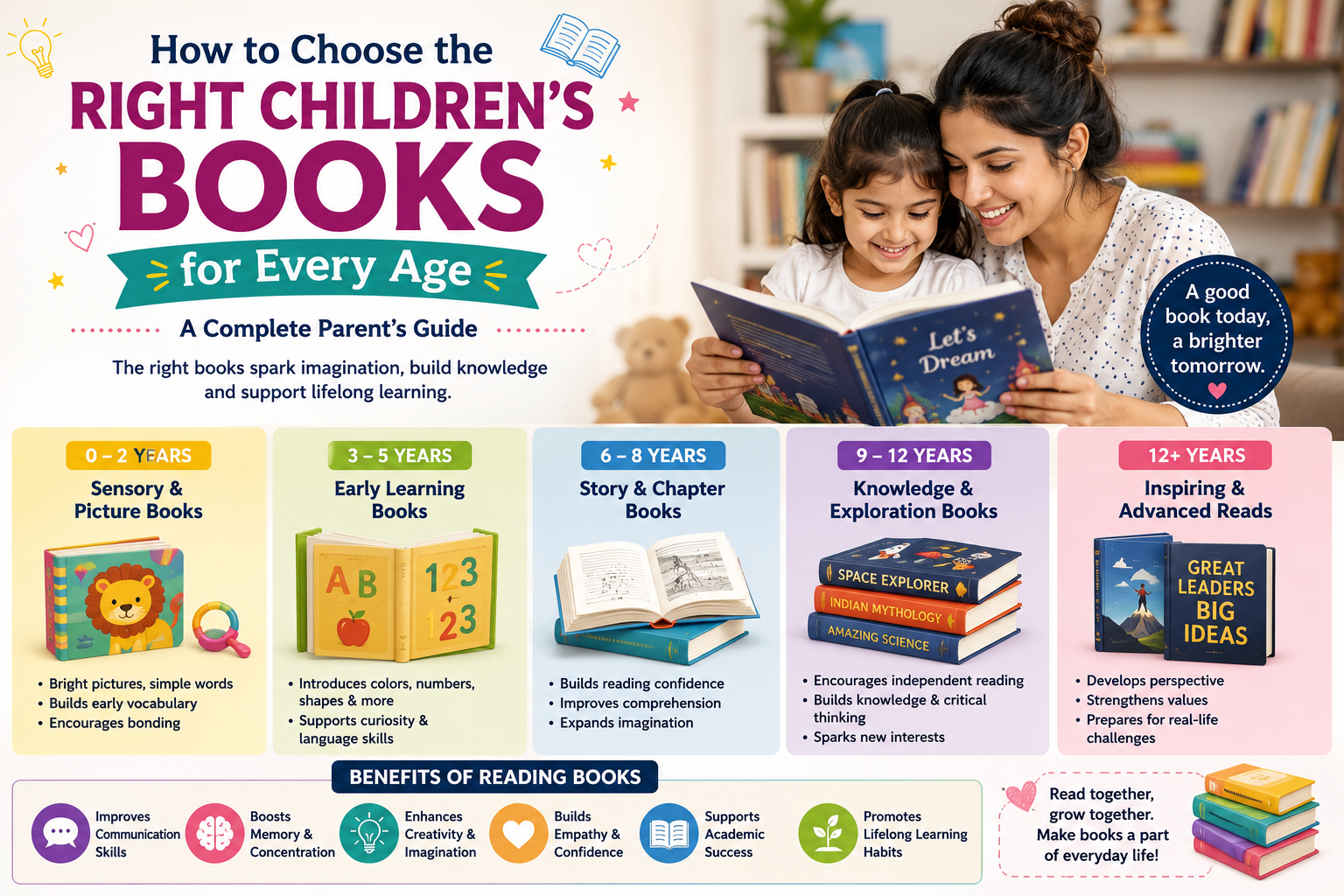
Choosing the right Children's Books is one of the most valuable investments parents can make in their child's future. Books do much more than entertain—they inspire curiosity, improve language skills, build creativity, and play a vital role in Child Development. From a baby's first picture book to engaging novels for pre-teens, selecting age-appropriate books helps children develop a lifelong love for reading.
With thousands of options available today, finding the perfect book can feel overwhelming. Understanding your child's age, interests, and developmental stage makes the process much easier. This complete guide will help you choose the best Learning Books and storybooks that support your child's educational and emotional growth.
Books are among the first tools children use to understand the world around them. Reading regularly introduces new words, teaches valuable life lessons, and encourages imagination.
Some of the biggest benefits of reading include:
The right Children's Books can shape a child's confidence, curiosity, and love for learning.
Every stage of childhood requires different types of books. Selecting books according to developmental milestones ensures children remain interested while learning effectively.
Babies respond best to colorful visuals and simple language.
Look for:
Reading aloud during infancy supports early Child Development, language recognition, and emotional bonding.
Preschoolers become curious about everything around them. This is the perfect time to introduce Learning Books that combine education with fun.
Choose books covering:
Interactive stories with engaging illustrations keep children interested while developing reading confidence.
Children in primary school begin reading on their own.
Look for:
Books that match school learning while remaining entertaining encourage regular reading habits.
Older children enjoy stories with interesting characters, exciting adventures, and educational topics.
Choose books about:
These Children's Books encourage independent learning and broaden a child's perspective.
Children enjoy reading more when books match their interests.
Ask yourself:
Choosing books based on hobbies creates excitement around reading and encourages children to finish books independently.
Not every educational book needs to feel like a textbook.
The best Learning Books teach through stories, activities, puzzles, and engaging illustrations.
Look for books that help children:
Books that combine learning with entertainment create meaningful reading experiences.
Illustrations are especially important for younger readers.
Bright, colorful images help children:
Beautiful illustrations also make reading more enjoyable and encourage repeated reading.
A balanced reading collection introduces children to different topics and perspectives.
Include:
A variety of Children's Books supports well-rounded Child Development.
Consistency is more important than reading for long hours.
Simple habits include:
Children who see reading as a fun family activity often develop lifelong reading habits.
Today's children need more than academic knowledge.
Well-designed Learning Books help develop:
These skills benefit children both inside and outside the classroom.
Before purchasing books, consider the following:
Investing in quality books today creates stronger readers tomorrow.
Reading every day provides long-term advantages for both learning and personal growth.
Some key benefits include:
These benefits make reading one of the most effective tools for healthy Child Development.
Selecting the right Children's Books isn't about buying the most popular titles—it's about choosing books that match your child's age, interests, and learning needs. From colorful picture books for toddlers to engaging chapter books for older children, every book contributes to intellectual, emotional, and social growth.
Adding thoughtfully selected Learning Books to your child's daily routine encourages curiosity, creativity, and confidence while supporting lifelong learning. As children grow, books become trusted companions that help them understand the world, express themselves, and dream bigger.
When parents make reading a regular habit, they give their children one of the greatest gifts—a love for knowledge that lasts a lifetime.

Discover the benefits of natural face care and explore herbal ingredients like aloe vera, turmeric, neem, rose water, sandalwood, and green tea for healthy, glowing skin. Learn how to build a simple herbal face care routine, choose suitable skincare products, and achieve glowing skin naturally with gentle cleansing, hydration, and daily sun protection.

Discover the world of Essential Oils and explore their different types, benefits, and everyday uses. From refreshing lemon and peppermint to calming lavender and warm sandalwood, learn how different fragrances can enhance your home and personal care routines. This guide explains the benefits of essential oils, their common applications, and important safety precautions. Find out how to identify Pure Essential Oils by checking ingredients, quality, and product information. Learn how to choose the Best Essential Oils to suit your fragrance preferences, lifestyle, and needs.

Discover the world of **diffuser oils** and learn about their types, benefits, uses, and fragrance options. From floral and citrus to woody and herbal scents, explore how **aromatherapy diffuser oils** can create a pleasant and relaxing atmosphere at home. Learn how to choose the **best diffuser oils** based on fragrance, room, ingredients, and personal preferences.


