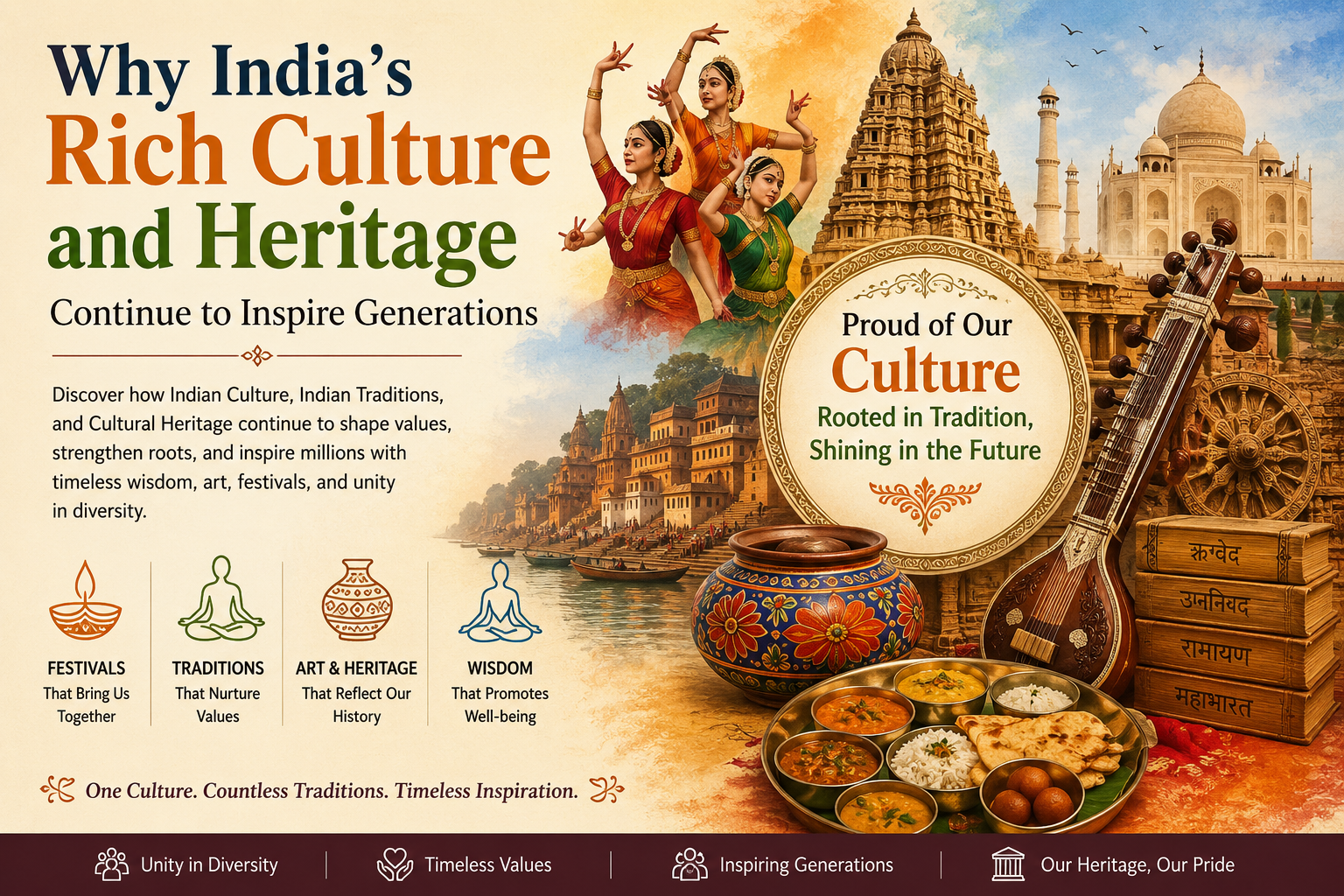
India is more than just a country—it's a living civilization that has preserved its traditions, values, and artistic brilliance for thousands of years. From magnificent temples and historical monuments to colorful festivals, classical arts, and diverse cuisines, Indian Culture represents one of the richest cultural landscapes in the
world.
Even in today's fast-paced digital era, people continue to embrace Indian Traditions because they offer a sense of identity, belonging, and timeless wisdom. India's Cultural Heritage inspires not only its own citizens but also millions of people around the globe who admire its philosophy, spirituality, architecture, and way of life.
In this blog, we'll explore why India's rich culture and heritage continue to inspire generations and why preserving them is more important than ever.
India is often called the land of diversity because every region has its own language, cuisine, clothing, festivals, customs, and art forms. Yet, despite these differences, there is an underlying unity that binds the nation together.
Indian Culture is deeply rooted in values such as:
These principles have been passed down through generations and continue to shape everyday life across the country.
Traditions are more than rituals—they are a way of preserving knowledge, values, and community spirit. Indian Traditions teach people to celebrate together, respect nature, honor relationships, and live with compassion.
Some of the most cherished traditions include:
These customs strengthen family relationships while keeping cultural values alive for future generations.
India's Cultural Heritage is one of the oldest and most diverse in the world. It includes tangible heritage like monuments and artifacts, as well as intangible heritage such as music, dance, folklore, crafts, and traditional knowledge.
Some remarkable examples include:
Every generation inherits these treasures and contributes to preserving them for the next.
Festivals are among the strongest symbols of Indian Culture. They celebrate faith, harvest, seasons, victories, and community spirit.
Popular festivals include:
These celebrations promote love, generosity, unity, and respect for different beliefs, making India an excellent example of cultural harmony.
India is home to hundreds of languages and dialects, each carrying centuries of history and literary excellence.
Ancient texts like the Vedas, Upanishads, Ramayana, and Mahabharata continue to influence philosophy, ethics, and storytelling worldwide.
Modern regional literature also reflects local traditions, folklore, and social values, making India's literary heritage incredibly rich.
Indian artisans have preserved traditional craftsmanship for centuries.
Some famous art forms include:
These crafts not only showcase artistic excellence but also support thousands of skilled artisans across the country.
Supporting handmade products helps preserve India's artistic legacy while promoting sustainable livelihoods.
Food plays an important role in Indian Traditions.
Each state offers unique flavors influenced by geography, climate, and history.
From South Indian dosas and idlis to North Indian curries, Gujarati thalis, Bengali sweets, Rajasthani delicacies, and Kashmiri cuisine, every meal tells a cultural story.
Traditional cooking methods, spices, and family recipes continue to connect generations around the dining table.
Two of India's greatest contributions to global wellness are Yoga and Ayurveda.
Yoga promotes physical fitness, mental peace, flexibility, and emotional balance.
Ayurveda focuses on natural healing, preventive healthcare, and maintaining harmony between mind, body, and spirit.
Today, millions of people worldwide practice these ancient systems for healthier lifestyles, proving that India's traditional wisdom remains relevant in modern times.
India's architectural heritage reflects centuries of artistic innovation and cultural evolution.
Magnificent temples, mosques, forts, stepwells, monasteries, palaces, and colonial buildings showcase remarkable craftsmanship.
Intricate carvings, sculptures, domes, and stonework reveal stories of ancient civilizations, rulers, and spiritual traditions.
These architectural masterpieces continue attracting travelers, historians, photographers, and researchers from around the world.
Modern lifestyles have changed how people live, but preserving Cultural Heritage remains essential because it:
Without preservation, valuable traditions and cultural practices could gradually disappear.
Today's youth are finding innovative ways to celebrate and preserve Indian Culture.
Many young people are:
Technology has become a powerful tool for spreading awareness about India's rich heritage across the globe.
Protecting India's cultural legacy offers long-term benefits for individuals and society.
Some key advantages include:
India's culture is a timeless blend of history, spirituality, diversity, and tradition that continues to inspire people across generations. From vibrant festivals and magnificent architecture to yoga, literature, art, music, and family values, Indian Culture reflects a legacy that has stood strong through centuries of change.
By embracing Indian Traditions and preserving our Cultural Heritage, we ensure that future generations remain connected to their roots while confidently embracing the future. Every celebration, every handcrafted artwork, every historical monument, and every cultural practice tells the story of India's extraordinary journey—one that continues to inspire the world with its resilience, wisdom, and beauty.

Discover the best body care products for soft, healthy, and glowing skin. Explore natural body care products, body lotions, herbal soaps, nourishing body oils, and body scrubs for your daily skincare routine. Learn how to choose the right body care essentials according to your skin type and needs. Find quality body care products online to support smooth, hydrated, and nourished skin. Explore the body care collection at Totally Indian and upgrade your everyday skincare routine.

Your eyes deserve a little extra care every day! 👀 Discover simple and effective eye care tips to maintain healthy eyes, reduce digital eye strain, and support better vision. From eating nutritious foods and taking screen breaks to getting enough sleep and protecting your eyes from UV rays, explore easy daily habits that can help keep your eyes comfortable and healthy. Start caring for your eyes today!

Discover the benefits of natural face care and explore herbal ingredients like aloe vera, turmeric, neem, rose water, sandalwood, and green tea for healthy, glowing skin. Learn how to build a simple herbal face care routine, choose suitable skincare products, and achieve glowing skin naturally with gentle cleansing, hydration, and daily sun protection.


